Vermicompost Making
A low-space micro-business that converts organic waste into nutrient-rich compost for farmers, gardeners, nurseries, and home growers.
Overview
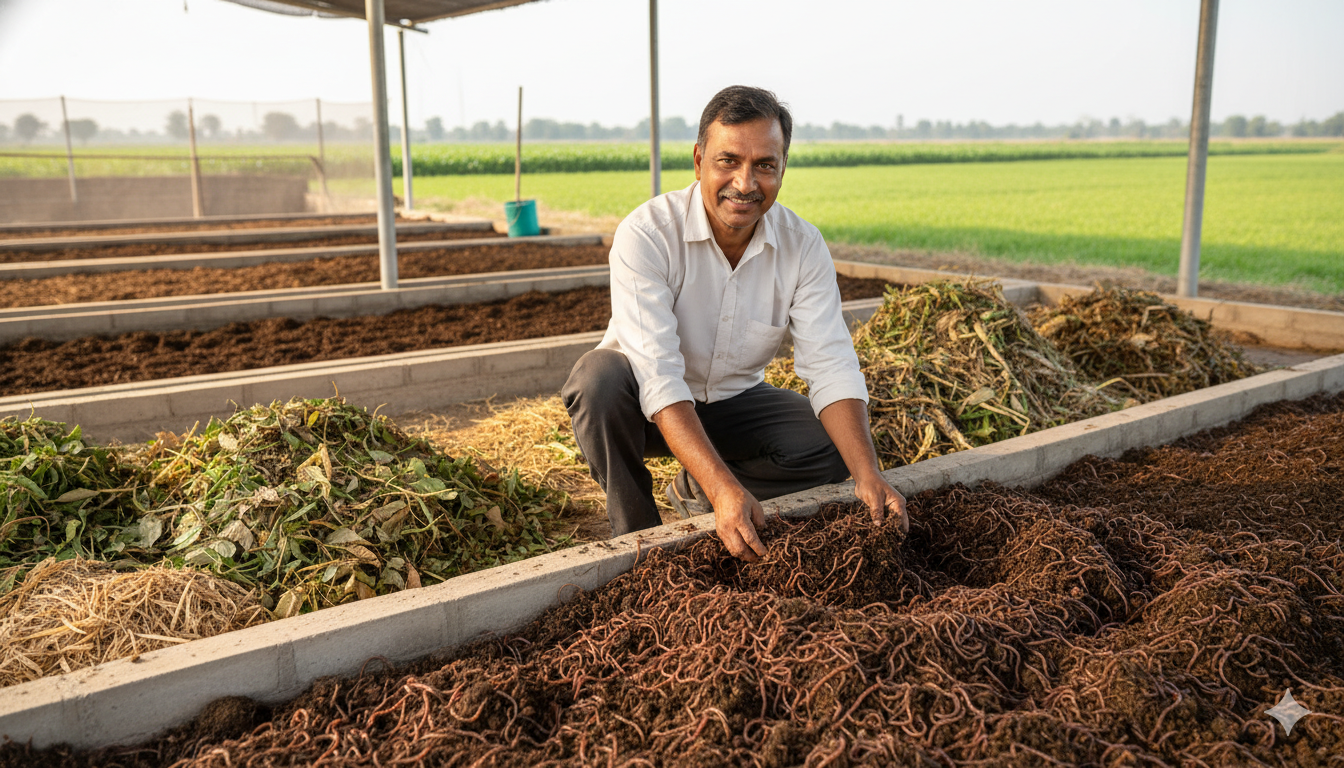
Vermicompost making involves using earthworms and decomposed organic material to produce nutrient-rich compost that can be sold to farmers, kitchen gardeners, nurseries, plant sellers, landscapers, and households. It can be started on a small scale in pits, beds, tanks, or covered containers and gradually expanded into a larger compost production business. Income may come from sale of vermicompost, worm culture in some cases, and linked organic input sales. This opportunity works well where cow dung, dry leaves, crop waste, vegetable waste, or other suitable organic material is available, along with shade, moisture control, and nearby buyers interested in soil improvement products. It is attractive because it can work with relatively limited space, but success depends on raw material quality, moisture balance, worm health, contamination control, curing time, and reliable selling channels.
Who this is suitable for
Suitable for rural families, homemakers, small-capital seekers, farmers, nursery operators, and users who can manage regular moisture, shade, and organic waste handling.
Who should avoid it
Not ideal for users who do not have access to suitable organic material, cannot maintain moisture and shade conditions, or want very fast daily income without production waiting time.
First Steps
-
Assess raw material, shade, and water availability
Check whether you have access to cow dung, dry leaves, crop waste, kitchen or vegetable waste, shade, and enough water to maintain moisture properly. -
Choose your production setup
Decide whether to start with compost beds, pits, tanks, or containers based on budget, space, and the amount of raw material available. -
Prepare the composting area
Set up a shaded, clean, and drain-friendly area where temperature, moisture, and waste handling can be managed safely. -
Arrange worms and suitable organic feed material
Collect healthy worm culture and prepare decomposable organic material in the right condition before adding worms to the bed. -
Maintain moisture and protection regularly
Monitor the bed for moisture, heat, air flow, and contamination so worm activity remains healthy and compost formation continues properly. -
Plan buyers before full production
Identify nearby farmers, nurseries, plant shops, kitchen gardeners, landscapers, or local input sellers before producing larger batches. -
Harvest, sieve, and pack the compost
Once the material is ready, separate or manage worm recovery properly, sieve the compost if needed, and pack it cleanly for sale. -
Expand into repeat production and related sales
After stabilizing quality and sales, increase the number of beds and add related products such as potting mix, organic manure packs, or worm culture supply.
Risks and Challenges
-
Poor moisture and temperature control: Too much heat, dryness, or excess water can reduce worm activity and damage the composting process.
-
Unsuitable raw material use: Using contaminated, chemical-heavy, or poorly decomposed material can harm worms and lower compost quality.
-
Slow conversion and working-capital waiting time: Compost takes time to become ready, so income may not come immediately if batch planning is weak.
-
Weak buyer linkage: If farmers, nurseries, or gardeners are not lined up in advance, compost may remain unsold or sell only at low rates.
-
Quality inconsistency: If batches vary in maturity, texture, or cleanliness, repeat customers may lose trust in the product.
Practical Fit
Where It Works Best
Market Dependency:
Depends on local demand from farmers, nurseries, home gardeners, organic growers, and the ability to sell in small packs or bulk quantities.
Raw Material Dependency:
Strong dependence on cow dung or other suitable organic waste, worm culture, shade, water availability, and clean organic input handling.
How to Succeed
When you may start earning:
Usually within 1 to 3 months depending on bed preparation, worm activity, raw material quality, and local demand.
Success Tips:
Start with a small batch, maintain proper moisture and shade, use clean organic material, protect worms from heat and contamination, and build buyers before producing in volume.
Common Mistakes to Avoid:
Using unsuitable waste, poor moisture control, direct sun exposure, overwatering, and producing too much without buyers can reduce quality and profits.