Street Food Vendor
Low to moderate investment food-selling business serving quick snacks and meals in busy local areas.
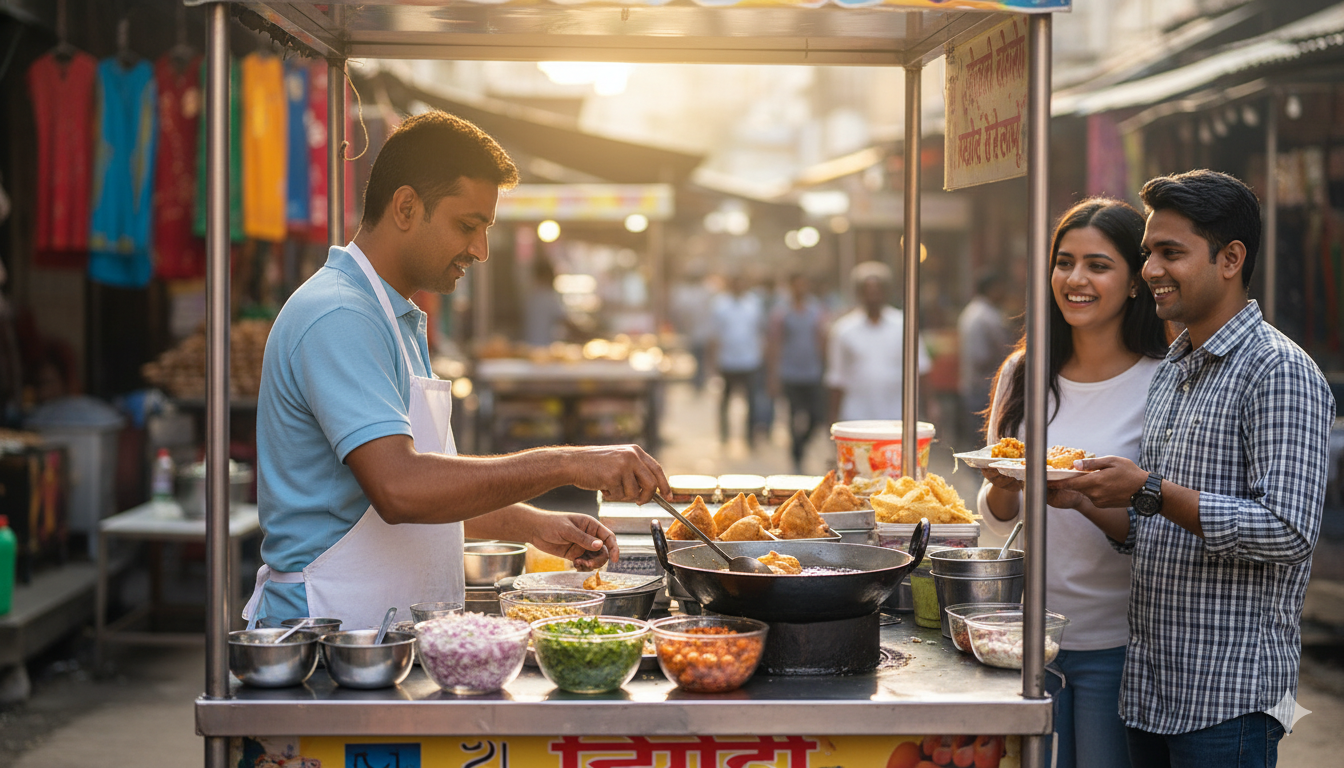
Overview
This opportunity involves preparing and selling street food such as chaat, pakora, samosa, momos, sandwiches, rolls, poha, chowmein, tea-time snacks, or other quick-eat local items through a cart, kiosk, roadside stall, or small fixed-point setup. Earnings depend heavily on taste, hygiene, speed, and location footfall.
Who this is suitable for
Suitable for practical small-capital seekers, families with cooking ability, and people who can manage daily preparation, customer rush, and local food demand.
Who should avoid it
Not ideal for users who dislike cooking work, long standing hours, heat, hygiene discipline, or daily operations with narrow profit margins.
First Steps
-
Choose a focused starter menu
Begin with one or two fast-selling items such as chaat, momos, sandwiches, rolls, pakora, or other local quick snacks instead of a large menu. -
Select a practical selling spot
Look for schools, colleges, office zones, evening markets, transport points, or busy neighborhood corners where repeat footfall is strong. -
Set up cooking, serving, and hygiene routine
Arrange stove, utensils, ingredients, serving materials, water, waste handling, and cleaning supplies before taking regular customers. -
Fix pricing and daily prep quantity
Price items carefully based on ingredient cost, gas, packaging, and local competition, and prepare only as much as likely to sell. -
Build repeat demand through taste and speed
Consistent taste, fresh ingredients, quick service, and polite customer handling usually create strong repeat business and word-of-mouth.
Risks and Challenges
-
Poor location choice: Even good food may not sell well if the stall is placed where daily footfall and repeat demand are weak.
-
Inconsistent taste and hygiene: If food taste, oil quality, freshness, or hygiene changes often, repeat customers can drop quickly.
-
Food wastage and spoilage: Preparing too much stock or handling ingredients poorly can create daily losses and reduce margins.
-
Thin margins under price pressure: If ingredient cost, gas cost, and competition are not managed well, sales may look strong while profit stays weak.
Practical Fit
Where It Works Best
Market Dependency:
Demand depends strongly on location footfall, office crowd, school and college movement, evening markets, and repeat taste-based demand.
Raw Material Dependency:
Depends on fresh raw material supply, oil and gas cost, ingredient quality, and daily replenishment discipline.
How to Succeed
When you may start earning:
Often within a few days to 2 weeks
Success Tips:
Choose one or two strong items first, maintain hygiene, keep taste consistent, and select a high-footfall spot with repeat demand.
Common Mistakes to Avoid:
Poor location choice, inconsistent taste, weak hygiene, and making too many items too early can reduce profit and repeat customers.