Pottery
A craft-based micro-business focused on making and selling clay products such as diyas, pots, utensils, decor items, and utility ware.
Overview
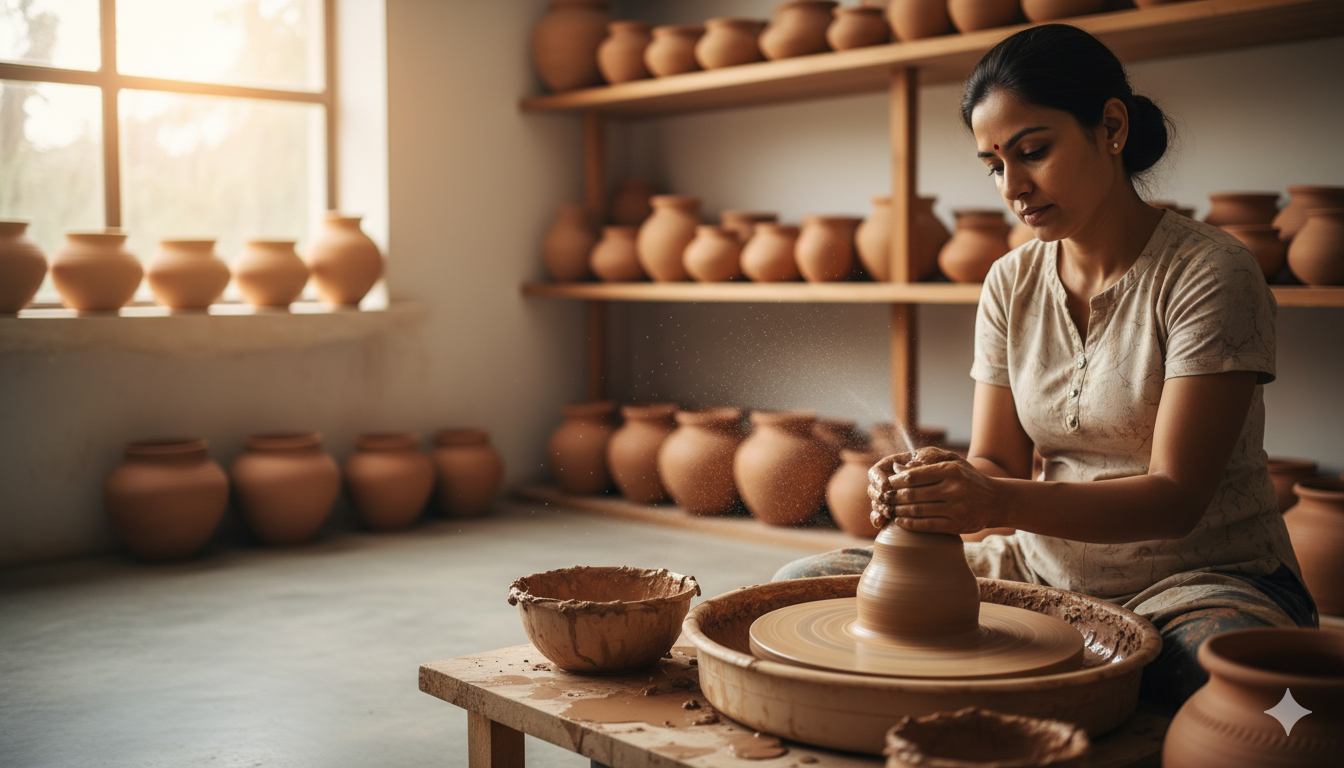
Pottery involves shaping clay into useful or decorative products such as diyas, matkas, planters, kulhads, flower pots, storage jars, incense holders, decor pieces, festival items, and traditional household ware. Depending on the local tradition and market, the business may use hand-shaping, wheel work, moulds, or a combination of methods. Products are dried, finished, and often fired before sale. Pottery can be run from home, a village workspace, or a small production area and may operate as family-based craft work, festival production, custom orders, or regular market supply. Income comes from local retail, weekly markets, festival sales, nursery supply, decor shops, wholesalers, or direct orders. Success depends on product quality, breakage control, design choice, drying and firing discipline, and access to buyers who value handmade or local clay products.
Who this is suitable for
Suitable for artisans, rural families, homemakers with craft interest, traditional pottery households, and users who can handle clay work, drying, shaping, and local selling patiently.
Who should avoid it
Not ideal for users who have no interest in hands-on craft work, cannot manage breakable inventory, or expect very fast income without production and selling effort.
First Steps
-
Choose your pottery product line
Decide whether to make diyas, kulhads, flower pots, planters, matkas, decor items, utility ware, or a mixed product range based on local demand. -
Assess clay, workspace, and drying conditions
Check whether you have suitable clay supply, enough working space, drying area, and weather-safe handling conditions for the products you plan to make. -
Arrange tools and shaping setup
Prepare wheel tools, moulds, hand tools, work surfaces, water access, and storage space so the production process runs smoothly. -
Start with easy and fast-moving items
Begin with simpler products and high-demand items so your shaping speed, drying control, and market understanding improve without excessive risk. -
Control drying, finishing, and firing carefully
Allow enough time for drying, check shape and finish properly, and manage firing carefully so breakage and rejection are reduced. -
Build local and seasonal sales channels
Sell through local markets, nurseries, decor shops, festival stalls, direct buyers, and repeat seasonal customers depending on your product type. -
Track breakage, demand, and best-selling products
Maintain simple records of what sells fast, which items break often, which seasons are strong, and which products give better margins. -
Expand into decorative and bulk-supply products
After stabilizing, add festival collections, painted decor items, nursery planters, gift pieces, or regular supply to shops and resellers.
Risks and Challenges
-
Breakage during drying, firing, or transport: Pottery products can crack or break at multiple stages, reducing usable stock and profit.
-
Slow-moving inventory: If the product mix does not match local demand, finished goods may remain unsold and block space and working capital.
-
Weather-related drying problems: Rain, humidity, or weak drying conditions can affect quality and delay production cycles.
-
Raw material or firing inconsistency: Poor clay quality or uneven firing can damage shape, strength, finish, and customer satisfaction.
-
Weak buyer linkage outside festival periods: If regular retail or wholesale channels are not developed, income may depend too heavily on seasonal demand.
Practical Fit
Where It Works Best
Market Dependency:
Depends on local household demand, festival demand, nursery and decor demand, tourism, craft fairs, and access to repeat bulk buyers or direct customers.
Raw Material Dependency:
Strong dependence on suitable clay, water, drying conditions, firing support, finishing material where used, and breakage-safe handling and storage.
How to Succeed
When you may start earning:
Usually within 2 to 6 weeks depending on product type, drying and firing cycle, and how quickly local buyers are available.
Success Tips:
Start with fast-moving items, control breakage, maintain shape and finishing quality, prepare stock before festivals, and build repeat buyers through consistent workmanship.
Common Mistakes to Avoid:
Poor clay quality, rushed drying, weak firing control, making too many slow-moving items, and rough transport can reduce profit quickly.