Oil Extraction Micro-Unit
A small processing business for extracting edible or local-use oils from oilseeds for nearby households, retailers, and small bulk buyers.
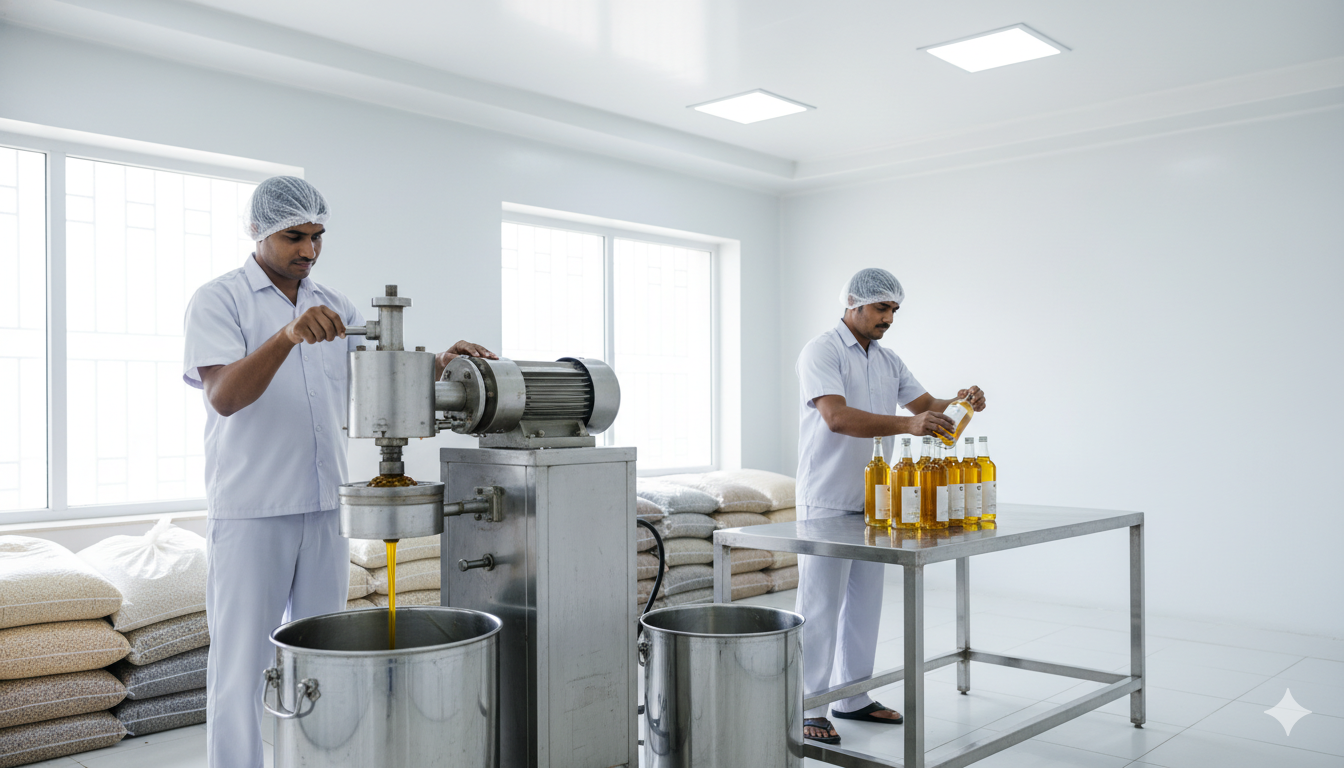
Overview
An oil extraction micro-unit involves processing oilseeds such as mustard, sesame, groundnut, coconut, sunflower, or other locally relevant seeds through a small expeller or extraction setup to produce oil for retail or local bulk sale. In some models, the business also earns from selling the by-product oil cake for cattle feed, manure, or related uses. It can be started from a small shop, semi-industrial room, village market point, or farm-linked processing area where machine installation, raw material handling, storage, and customer access are practical. Income may come from custom seed crushing for customers, direct sale of extracted oil, packaged oil sales, and by-product utilization. Success depends on machine reliability, seed quality, cleanliness, correct storage, extraction efficiency, power availability, and strong local buyer trust in oil quality.
Who this is suitable for
Suitable for small-capital seekers, processing-oriented entrepreneurs, rural and semi-urban families, and users who can manage machine operation, raw material sourcing, hygiene, and customer trust.
Who should avoid it
Not ideal for users without access to a suitable machine space, seed supply, power setup, or those looking for a no-maintenance business with minimal operational discipline.
First Steps
-
Assess local oil demand and seed availability
Check whether nearby households, retailers, farmers, or small businesses need fresh local oil and whether oilseeds are available regularly at workable prices. -
Choose your operating model
Decide whether to do custom oil extraction for customers, direct retail oil sales, packaged oil sales, or a mixed model with by-product oil cake sales. -
Set up machine and workspace
Arrange the oil expeller, motor, electrical setup, storage area, weighing tools, and a clean working space before opening the unit. -
Arrange seed sourcing and storage process
Plan how you will source, clean, store, and handle seeds safely so extraction quality remains good and spoilage is reduced. -
Set pricing and service rules clearly
Define rates for custom crushing, oil sale, packaging, and by-product handling so customers understand your charges and offerings clearly. -
Start with local trust-based customers
Begin with nearby households, farmers, retailers, and local contacts so repeat demand and word-of-mouth trust build steadily. -
Maintain hygiene, yield, and machine reliability
Clean the unit regularly, track oil output, avoid contamination, and keep the machine in working condition so service quality remains dependable. -
Expand into packaging and repeat supply
After stabilizing, add small retail packs, local shop supply, branded selling, or more seed categories based on demand and margins.
Risks and Challenges
-
Machine breakdown and downtime: If the expeller or motor stops working, production can halt and customer trust may fall quickly.
-
Poor raw material quality: Low-quality or badly stored seeds can reduce oil yield, affect taste or smell, and reduce repeat demand.
-
Power and operating cost issues: Electricity problems, repair costs, or inefficient operation can reduce margins and disrupt service.
-
Hygiene and purity complaints: If customers doubt the cleanliness or purity of the extracted oil, the business may lose trust quickly.
-
Weak buyer linkage or competition from branded oils: If local customers prefer packaged branded oils or the unit lacks visibility, sales may remain slower than expected.
Practical Fit
Where It Works Best
Market Dependency:
Depends on local edible oil demand, trust in freshness and purity, oilseed availability, neighborhood buying behavior, competition from branded oils, and access to small retailers or bulk users.
Raw Material Dependency:
Strong dependence on good-quality oilseeds, machine parts, power availability, storage containers, packaging material, and clean handling conditions.
How to Succeed
When you may start earning:
Usually within 2 to 6 weeks if the unit is installed properly and local seed supply or custom extraction demand already exists.
Success Tips:
Use quality seeds, maintain machine cleanliness, be transparent about yield and pricing, package attractively, and build repeat trust through consistency and freshness.
Common Mistakes to Avoid:
Using low-quality seeds, poor storage, weak machine maintenance, unclear customer charges, and low hygiene can reduce repeat buyers and profitability.