Mushroom Cultivation
A low-space micro-business based on growing edible mushrooms for local sale to households, shops, and food businesses.
Overview
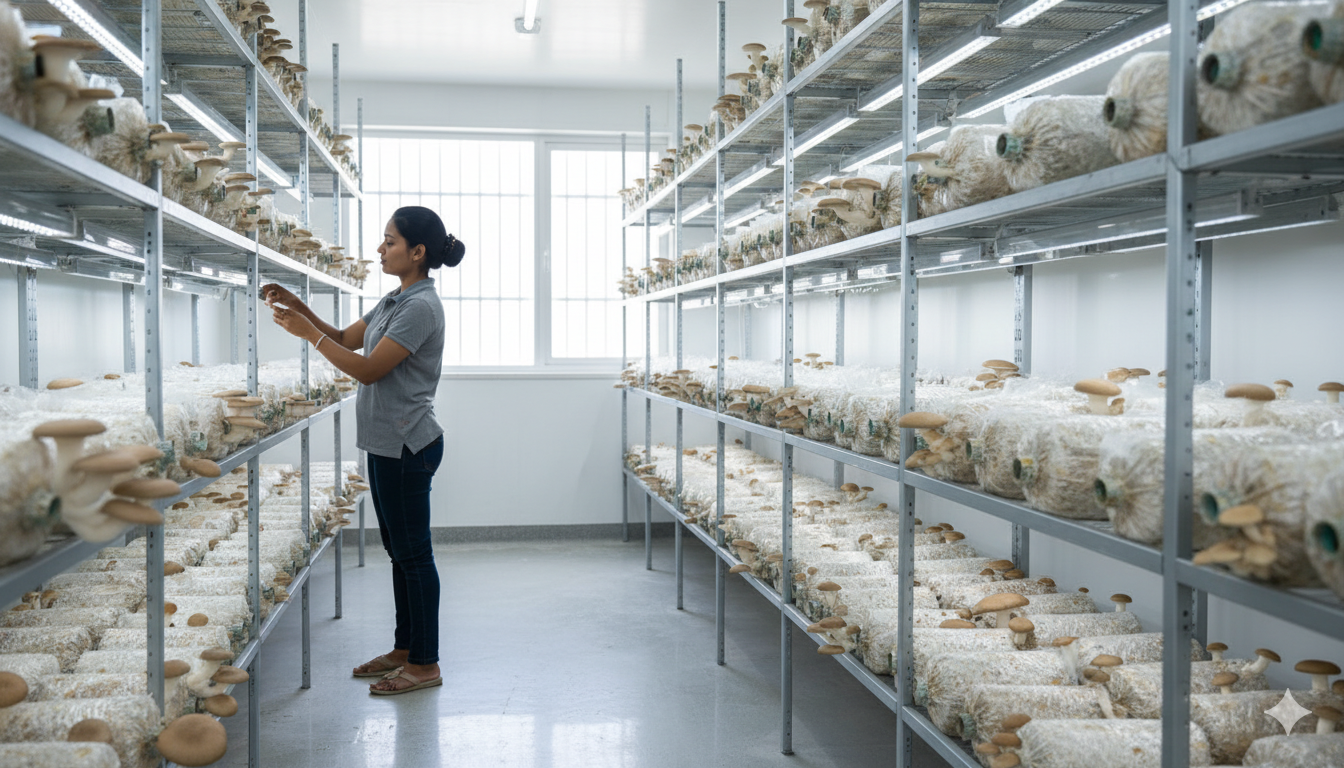
Mushroom cultivation involves growing edible mushrooms in a controlled, clean environment using substrate materials such as straw, compost, or other suitable growing media. It can start from a small room, shed, or insulated workspace and later scale into a larger production setup. Income may come from sale of fresh mushrooms, dried mushrooms, mushroom spawn support in some cases, and local supply to households, vegetable vendors, grocery stores, restaurants, hotels, and caterers. This opportunity is attractive because it can work in limited space and can be started with moderate investment, but success depends heavily on hygiene, temperature and moisture management, quality raw material, correct handling of spawn, contamination control, and reliable market linkage.
Who this is suitable for
Suitable for youth, homemakers, small-capital seekers, rural and semi-urban families, and users who can maintain cleanliness, follow process discipline, and manage batch-based production carefully.
Who should avoid it
Not ideal for users who cannot maintain hygiene and temperature control, do not have a protected workspace, or want a business with almost no monitoring.
First Steps
-
Choose your mushroom type and scale
Decide whether to start with a simple small batch of oyster or similar beginner-friendly mushrooms, and choose a production size that you can monitor properly. -
Prepare a clean growing space
Set up a room, shed, or protected area where moisture, airflow, shade, and cleanliness can be maintained consistently during the crop cycle. -
Arrange raw material and equipment
Collect substrate material, quality spawn, containers or bags, racks, water spray tools, and basic hygiene supplies before starting the batch. -
Prepare and inoculate the substrate
Process and fill the growing medium correctly, add spawn carefully, and keep handling clean so contamination risk stays low. -
Monitor humidity, temperature, and hygiene
Observe the crop daily for moisture, airflow, contamination, and healthy growth so problems are caught early. -
Plan local sales before harvest
Identify households, vegetable shops, grocery stores, restaurants, caterers, or local markets so fresh mushrooms can be sold quickly. -
Harvest, sort, and pack properly
Pick mushrooms at the right stage, handle them gently, and pack them cleanly so shelf life and customer trust improve. -
Expand into repeated batch production
After one or two successful cycles, increase the number of batches, improve packaging, and build regular buyer relationships.
Risks and Challenges
-
Contamination risk: Poor hygiene, unclean substrate, or careless handling can spoil a batch and reduce output significantly.
-
Temperature and moisture imbalance: If humidity, ventilation, or temperature are not managed properly, mushroom growth can slow or fail.
-
Perishability of fresh mushrooms: Fresh mushrooms need quick selling and careful handling, otherwise spoilage can reduce profits.
-
Weak spawn or poor raw material quality: Low-quality spawn or substrate can reduce yield and make the entire batch unreliable.
-
Overproduction without buyer planning: Growing more than local demand can lead to fast spoilage and distress selling.
Practical Fit
Where It Works Best
Market Dependency:
Depends on local demand from households, vegetable shops, grocery stores, hotels, restaurants, and the ability to sell fresh product quickly after harvest.
Raw Material Dependency:
Strong dependence on good-quality spawn, clean substrate materials, water availability, suitable growing conditions, and contamination-control supplies.
How to Succeed
When you may start earning:
Usually within 1 to 2 months depending on mushroom type, batch setup, and speed of local sales.
Success Tips:
Start with a small trial batch, maintain strict cleanliness, monitor moisture and temperature carefully, source good spawn, and line up buyers before harvest.
Common Mistakes to Avoid:
Poor hygiene, low-quality spawn, weak temperature control, overproduction without buyers, and careless handling after harvest can reduce yield and profit quickly.