Handmade Crafts / Gift Items Business
Home-based small business for customized crafts, decor, and gift items.
Overview
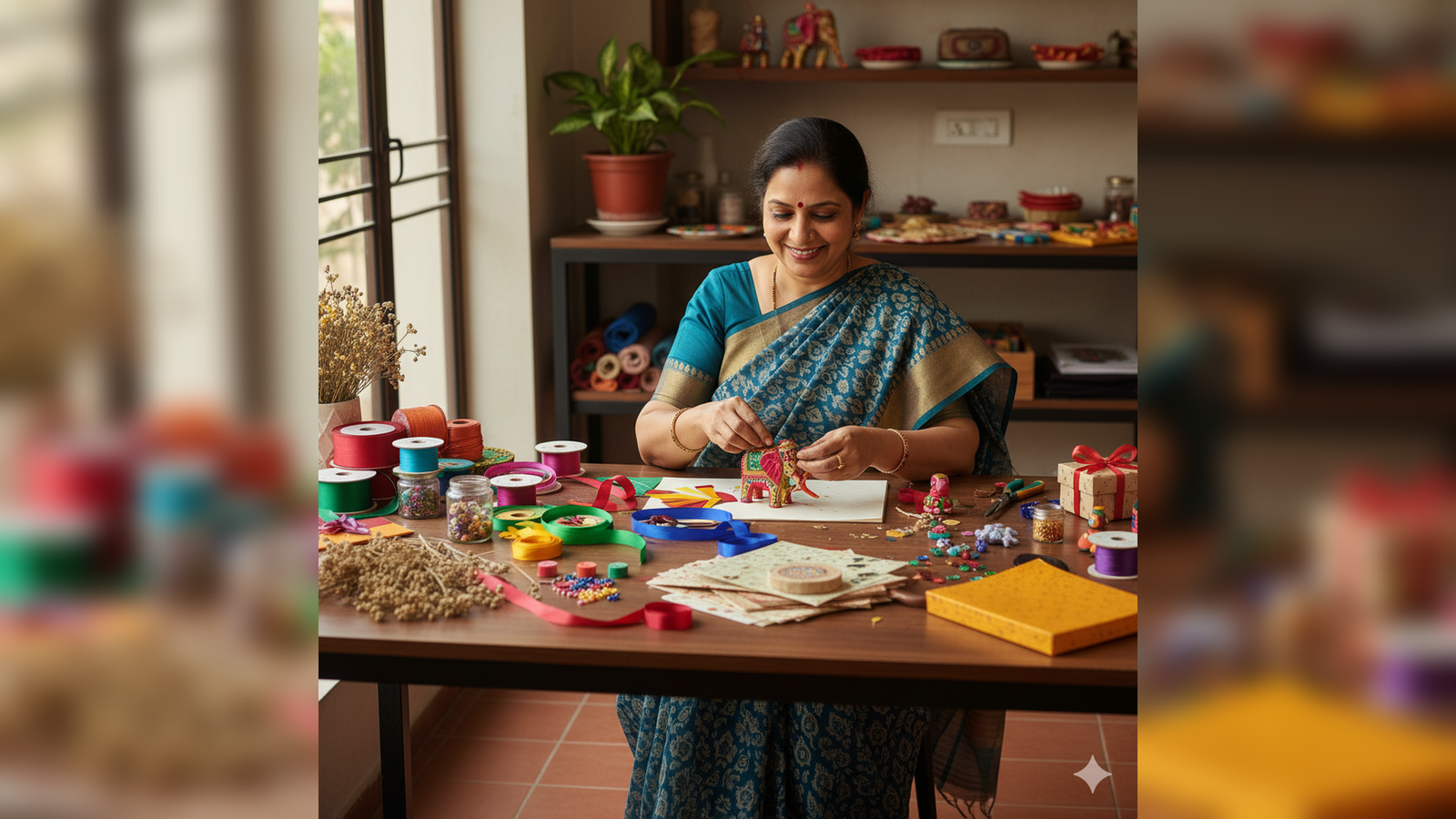
This opportunity involves making and selling handmade gift items, return gifts, festive decor, customized craft products, and small decorative items from home or a small workspace.
Who this is suitable for
Suitable for homemakers, creative youth, part-time sellers, and small-capital seekers who can make attractive handmade products and sell through local networks or repeat orders.
Who should avoid it
Not ideal for users who dislike detailed handwork, cannot maintain finishing quality, or do not have patience for custom-order production.
First Steps
-
Choose a narrow starter product line
Begin with a small set of products such as handmade gift hampers, decorated jars, paper crafts, festive decor, customized name items, or simple return gifts. -
Create sample pieces and pricing
Make a few high-quality samples, calculate raw material and packing cost carefully, and fix simple pricing for regular, custom, and bulk orders. -
Set up basic materials and workspace
Arrange a clean home workspace with scissors, glue tools, ribbons, papers, decorative items, packing supplies, and safe storage for unfinished products. -
Start with local and WhatsApp-based sales
Take early orders from neighbors, school circles, local women groups, festive events, and WhatsApp contacts to build trust and gather product feedback. -
Expand into custom and seasonal demand
After getting repeat buyers, add festive gifting, return gifts, personalized orders, and small reseller or boutique tie-ups.
Risks and Challenges
-
Weak product differentiation: If products look too generic or poorly finished, buyers may not see enough value to order repeatedly.
-
Underpricing handmade labor: Many beginners count raw materials but forget the time and skill required for design, finishing, and packaging.
-
Seasonal order fluctuation: Demand often increases around festivals, weddings, birthdays, and school events, but may slow down in normal periods unless regular channels are built.
-
Inventory and packaging waste: Buying too many decorative materials or packaging items too early can lock money into slow-moving stock.
Practical Fit
Where It Works Best
Market Dependency:
Demand depends on festivals, school events, weddings, gifting trends, local referrals, and customization demand.
Raw Material Dependency:
Depends on affordable access to papers, ribbons, packaging, decorative supplies, and other craft materials.
How to Succeed
When you may start earning:
Can begin within 1 to 2 weeks
Success Tips:
Start with a small product range, keep finishing quality high, take good product photos, and grow through referrals and seasonal demand.
Common Mistakes to Avoid:
Trying too many products too early, underpricing handmade labor, and poor finishing quality can reduce repeat orders.