Handloom Weaving
A traditional skill-based micro-business focused on weaving fabric, sarees, shawls, stoles, gamchas, and other handmade textile products.
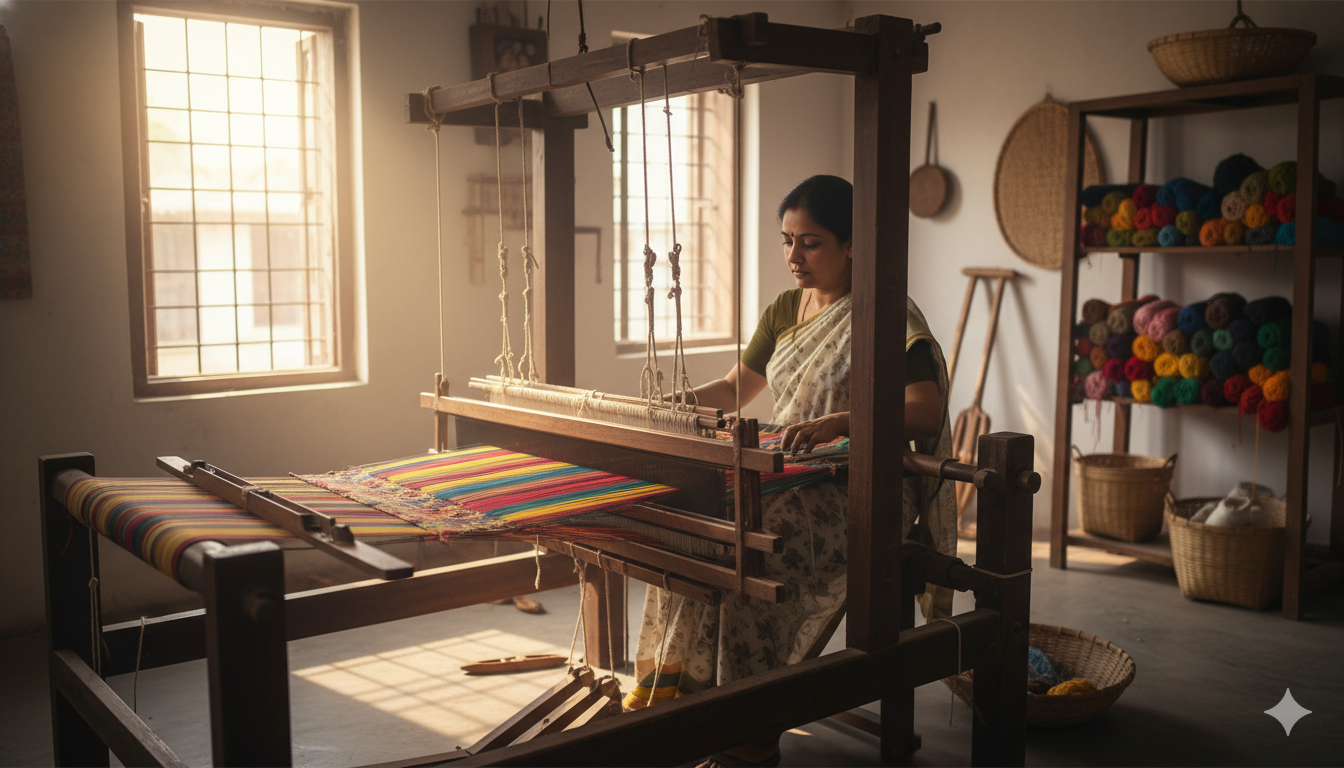
Overview
Handloom weaving involves producing fabric and textile items manually on a handloom using cotton, silk, wool, blends, or other yarns depending on the local weaving tradition and market. Products may include sarees, dupattas, stoles, shawls, scarves, dress material, towels, gamchas, home linen, and craft-based specialty fabrics. This opportunity can be run from home or a small weaving workspace and may operate as family-based production, piece-rate weaving, custom design work, or direct product selling. Income may come from weaving for traders, master weavers, cooperatives, boutiques, exhibitions, online resellers, or direct local buyers. Success depends on weaving skill, design quality, yarn quality, finishing, consistency, and access to reliable buyers who value handmade products.
Who this is suitable for
Suitable for skilled artisans, traditional weaving families, homemakers with weaving experience, and users who have access to a loom, patience for detailed work, and interest in textile craft.
Who should avoid it
Not ideal for users with no interest in handcraft work, no access to weaving skill or training, or those expecting very fast income without production time and buyer development.
First Steps
-
Assess weaving skill and product type
Decide whether you will weave sarees, shawls, stoles, towels, gamchas, dress material, or other fabric based on your skill and local demand. -
Choose your working model
Decide whether to weave for traders or master weavers, join cooperative-style supply, take custom orders, or make finished products for direct sale. -
Set up loom and workspace
Prepare a clean and organized weaving area with the loom, yarn storage, warping tools, and enough space for smooth daily work. -
Source yarn and plan designs carefully
Arrange good-quality yarn and decide colors, patterns, size, and finishing style so the final product matches buyer expectation. -
Start with manageable production
Begin with simpler or smaller-volume work so quality, timing, and buyer satisfaction can be maintained consistently. -
Maintain quality and finishing discipline
Check edge finish, weaving consistency, color quality, thread tension, and overall neatness so the product is more marketable. -
Build repeat buyer channels
Work with traders, boutiques, exhibitions, local markets, or direct craft buyers who appreciate handmade textile quality and can place repeat orders. -
Expand into better designs and direct sales
After stabilizing, add stronger designs, branded finishing, premium fabric ranges, and better direct-selling channels for higher margins.
Risks and Challenges
-
Slow production cycle: Handloom weaving takes time, so income may come more slowly compared with faster trading or processing businesses.
-
Weak buyer linkage: If dependable traders, boutiques, or direct buyers are not available, finished fabric may remain unsold or sell at low rates.
-
Raw material cost fluctuation: Yarn prices and input costs can rise and reduce margins if pricing is not adjusted properly.
-
Quality inconsistency: Uneven weaving, weak finishing, or color and design inconsistency can reduce repeat demand.
-
Dependence on a single trader or contractor: Relying on one buyer can create payment delays, pricing pressure, and unstable work flow.
Practical Fit
Where It Works Best
Market Dependency:
Depends on demand for handmade textiles, local craft recognition, trader relationships, boutique demand, festival sales, exhibitions, and the ability to sell design-based products.
Raw Material Dependency:
Strong dependence on yarn quality, color and dye inputs where used, loom maintenance, design materials, and access to affordable raw material supply.
How to Succeed
When you may start earning:
Usually within 2 to 8 weeks depending on whether the work is piece-rate weaving, pre-booked orders, or direct product sale after production.
Success Tips:
Focus on quality weaving, neat finishing, distinctive patterns, timely delivery, and steady buyer relationships with traders, boutiques, or direct customers.
Common Mistakes to Avoid:
Using poor-quality yarn, weak finishing, slow delivery, copying non-moving designs, and depending only on one buyer can reduce earnings and stability.