Flour Mill Micro-Business
A machine-based local business for grinding wheat, maize, spices, pulses, and related grains for households, farmers, and small shops.
Overview
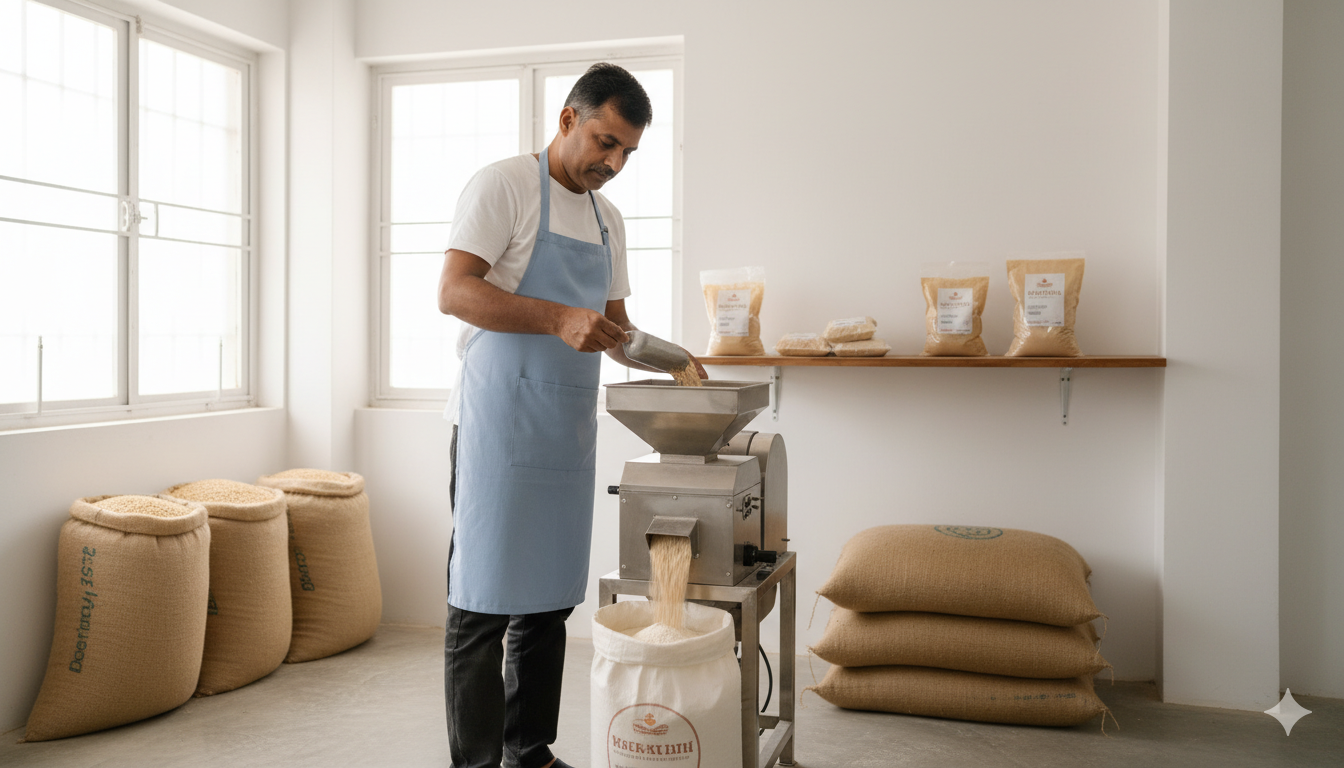
A flour mill micro-business involves operating a small grinding unit that provides grain milling services or sells processed flour and related ground products. The business may serve nearby households, farmers, kirana stores, snack makers, tea shops, and local food businesses. Common services include wheat flour grinding, maize flour grinding, gram or pulse grinding, spice grinding in some setups, and custom milling for customers who bring their own grains. It can be started from a small shop, roadside unit, village market point, or home-adjacent commercial space where electricity and customer access are available. Income comes from grinding charges, retail sale of packed flour, and repeat local customers. Success depends on machine reliability, location visibility, power availability, hygiene, grain-handling discipline, and steady neighborhood demand.
Who this is suitable for
Suitable for small-capital seekers, rural and semi-urban families, shop-based entrepreneurs, and users who can manage machine operation, customer handling, cleanliness, and regular local service.
Who should avoid it
Not ideal for users without access to a suitable operating space, power supply, machine maintenance ability, or those looking for a fully passive business with no daily customer interaction.
First Steps
-
Assess local demand and competition
Check whether nearby households, villages, farmers, and local shops need grain grinding services and how many similar mills already operate in the area. -
Choose location and service model
Decide whether to operate from a village market, roadside shop, mandi area, or home-adjacent commercial space and whether you will do service grinding only or also sell packed flour. -
Install machine and utility setup
Arrange the grinding machine, motor, electrical setup, weighing system, cleaning tools, and safe working space before opening for customers. -
Set pricing and operating process
Define service rates per kilogram or per batch, working hours, product categories, packaging charges if any, and machine cleaning routine. -
Start with household and farmer customers
Begin by serving nearby homes and farmers who bring their own grains, so local trust and word-of-mouth build faster. -
Maintain hygiene and machine reliability
Clean the machine regularly, avoid mixing product types carelessly, and keep the motor and parts in good condition so service quality remains strong. -
Track daily volume and customer preferences
Maintain simple records of grinding quantity, customer type, product mix, downtime, and peak demand timings to improve operations. -
Expand into packaged and value-added products
After stabilizing, add packed flour, spice grinding where practical, multi-grain flour blends, or regular supply to nearby shops and food businesses.
Risks and Challenges
-
Machine breakdown and downtime: If the grinding machine or motor fails, daily income can stop immediately and customer trust may fall.
-
Power supply issues: Frequent electricity problems can reduce operating hours and frustrate customers during busy times.
-
Hygiene and product-mixing complaints: Poor cleaning or careless handling between grain types can lead to quality complaints and loss of repeat customers.
-
Low customer footfall or strong competition: If location demand is weak or there are too many nearby mills, the business may struggle to reach profitable daily volume.
-
Wrong weight or service disputes: Inaccurate weighing, unclear charges, or poor handling of customer grain can create mistrust quickly.
Practical Fit
Where It Works Best
Market Dependency:
Depends on nearby household demand, grain-consuming families, farmer footfall, local market traffic, pricing competition, and trust in flour quality and service speed.
Raw Material Dependency:
Depends on machine parts, electricity, customer grain inflow or wholesale grain supply, packaging material, and cleaning and maintenance inputs.
How to Succeed
When you may start earning:
Often within 2 to 4 weeks if the machine is installed in a visible location with regular neighborhood demand.
Success Tips:
Choose a location with daily footfall, keep the machine clean, maintain correct weight and quality, offer fast service, and build repeat customers through trust.
Common Mistakes to Avoid:
Ignoring machine maintenance, poor hygiene, wrong weighing, excessive downtime, and weak local promotion can reduce repeat business quickly.