Fish Farming
A pond- or tank-based rural and semi-urban micro-business built around rearing fish for local sale and recurring farm income.
Overview
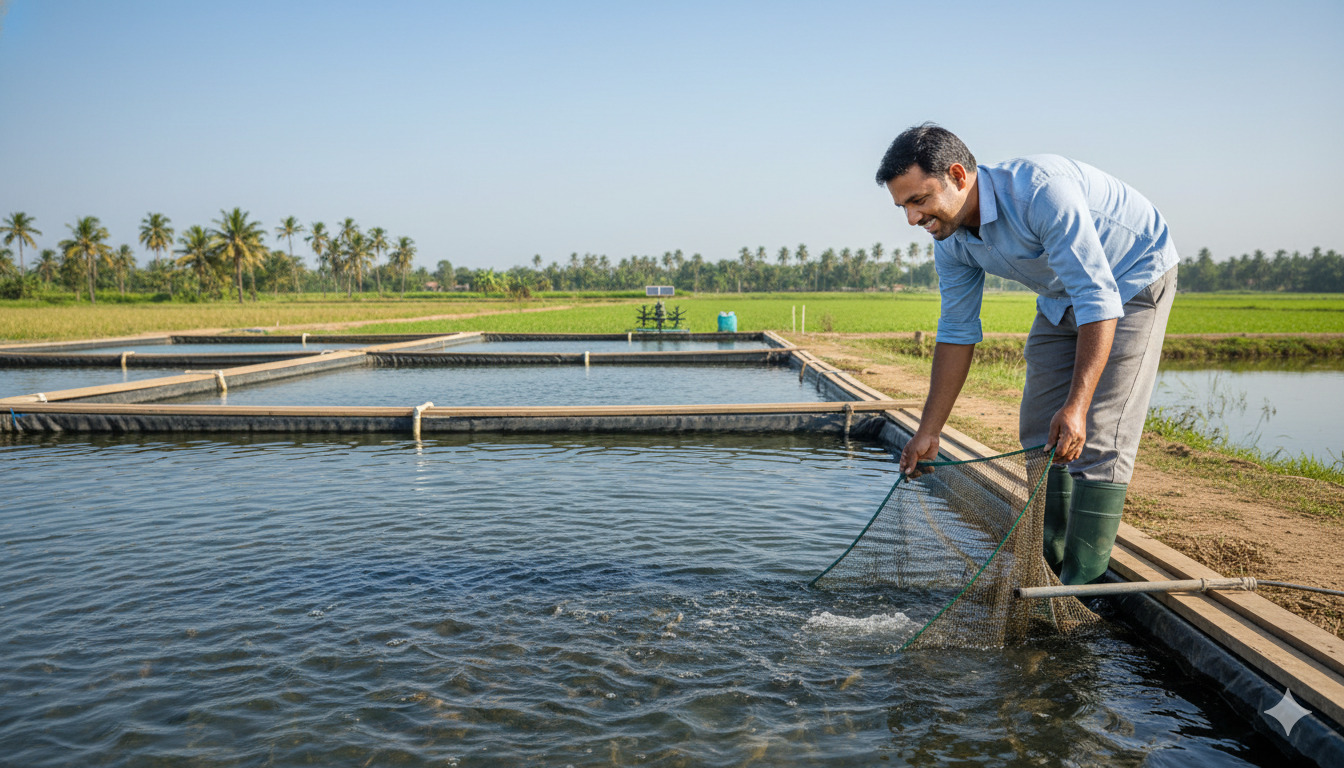
Fish farming involves rearing fish in ponds, tanks, or water bodies for sale to local markets, traders, households, hotels, restaurants, or bulk buyers. It can be done on a small scale in farm ponds or tanks and expanded gradually into a larger commercial operation. Income may come from table fish sale, fingerling rearing in some models, seasonal harvests, and linked activities such as manure use or water-resource-based integrated farming. This opportunity works best where suitable water availability, pond or tank space, feed access, fingerling supply, and nearby fish buyers are available. It can be profitable, but success depends heavily on water quality, stocking decisions, disease control, feeding management, theft prevention, and market timing.
Who this is suitable for
Suitable for rural families, landholders, small-capital seekers, and users who have access to ponds, tanks, or water resources and can manage regular observation, feeding, and harvest planning.
Who should avoid it
Not ideal for users without water access, pond or tank space, local fish market linkage, or those seeking a zero-maintenance or purely office-based business.
First Steps
-
Assess pond, tank, or water resource availability
Check whether you already have a pond, tank, leased water body, or enough land and water access to create a fish-rearing setup. -
Choose the fish farming model
Decide whether to do pond fish farming, tank-based fish farming, mixed-species farming, or a smaller local rearing model based on budget and water conditions. -
Prepare pond or tank properly
Clean and prepare the pond or tank, check water-holding ability, improve boundaries, and make sure basic water-quality management is possible before stocking. -
Source healthy fingerlings and feed
Buy fingerlings from reliable sources and arrange feed and basic support materials before starting so fish survival and growth improve. -
Plan your buyers in advance
Identify traders, local fish sellers, households, hotels, restaurants, or nearby markets so harvested fish can be sold smoothly. -
Follow feeding and water monitoring routine
Maintain a regular schedule for feeding, checking water level and quality, observing fish behavior, and spotting signs of disease or low growth early. -
Track survival, growth, and costs
Keep records of stocking count, feed used, fish growth, pond expenses, treatment costs, and expected harvest timing to understand real profit. -
Harvest and expand carefully
After a successful cycle, improve buyer linkages, refine species choice, and expand pond size or stocking only when water and cost management are stable.
Risks and Challenges
-
Water quality problems: Poor water quality, contamination, or oxygen issues can reduce fish growth and sometimes cause large-scale mortality.
-
Poor stocking decisions: Overstocking or buying weak fingerlings can reduce survival, growth, and final profitability.
-
Feed cost and growth imbalance: If feed is too expensive or growth remains low, the business may become less profitable than expected.
-
Theft or harvest loss: Fish theft, pond damage, or poorly planned harvesting can reduce total sale quantity and income.
-
Weak buyer linkage: If buyers are not planned in advance, harvest-time selling pressure can reduce prices and cash flow.
Practical Fit
Where It Works Best
Market Dependency:
Depends on local fish demand, trader network, restaurant or household demand, seasonal price movements, and access to nearby markets.
Raw Material Dependency:
Strong dependence on pond or tank water quality, fingerlings, feed, medicines or treatment inputs where needed, and water management support.
How to Succeed
When you may start earning:
Usually within 4 to 9 months depending on the fish species, pond readiness, stocking model, and local sale channel.
Success Tips:
Choose the right species for the area, maintain water quality carefully, start with manageable stocking levels, secure buyers early, and keep records of feed and growth.
Common Mistakes to Avoid:
Poor pond preparation, overstocking, irregular feeding, weak water monitoring, and unclear selling plans can reduce survival and profitability.