Boutique / Ethnic Wear Home Business
Home-based fashion business selling ethnic wear, women's suits, sarees, dress materials, and boutique-style clothing.
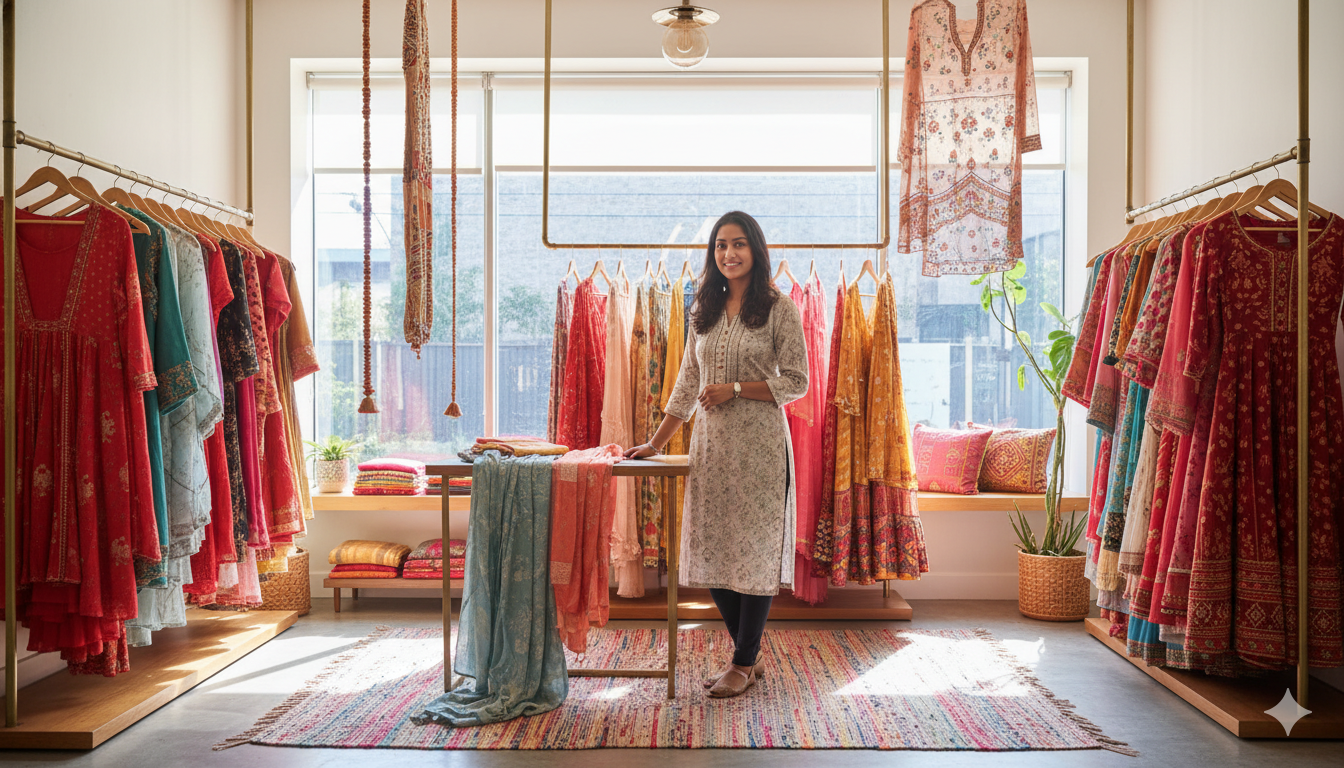
Overview
This opportunity involves selling or curating ethnic wear, boutique clothing, women's suits, sarees, kurtis, dupattas, blouse materials, festive outfits, and related fashion items from home. The business can run through local display, WhatsApp selling, neighborhood visits, custom stitching tie-ups, festival collections, or repeat order-based selling.
Who this is suitable for
Suitable for homemakers, part-time sellers, small-capital seekers, and families with interest in clothing, styling, customer interaction, and repeat local sales.
Who should avoid it
Not ideal for users who dislike fashion selling, stock handling, size and color coordination, customer follow-up, or seasonal trend changes.
First Steps
-
Choose a focused ethnic-wear category
Begin with one or two focused segments such as kurtis, dress materials, sarees, festive suits, kids ethnic wear, or blouse pieces instead of stocking too many categories. -
Find reliable suppliers and small starter stock
Source from wholesalers, local markets, or catalog suppliers and begin with a limited stock or sample set that matches your likely customer base. -
Set up home display and WhatsApp selling
Use a clean home display area, product photos, size notes, fabric details, and WhatsApp sharing to make buying easy for local customers. -
Track sizes, preferences, and repeat demand
Maintain a simple record of what styles, sizes, colors, and price ranges sell best so future stock is more accurate. -
Grow through festive collections and customization
Once demand stabilizes, add festival collections, wedding wear, matching accessories, and tailoring or alteration tie-ups for better value.
Risks and Challenges
-
Slow-moving fashion stock: Buying too many slow-selling styles, colors, or sizes can lock money into unsold inventory.
-
Supplier quality mismatch: If fabric quality, stitching finish, or actual product appearance differs from expectation, customer trust may drop quickly.
-
Weak margin control: Discounting too much, offering too many home visits, or absorbing alteration and delivery costs can reduce profit significantly.
-
Trend and season dependency: Sales may rise during festivals and wedding seasons but slow in normal periods unless repeat buyers and core essentials are built.
Practical Fit
Where It Works Best
Market Dependency:
Demand depends on local purchasing power, festive seasons, wedding demand, women's groups, repeat buyers, and trust-based fashion selling.
Raw Material Dependency:
Depends on reliable clothing suppliers, quality consistency, style selection, size range, and packaging availability.
How to Succeed
When you may start earning:
Often within 1 to 2 weeks
Success Tips:
Start with a focused ethnic-wear category, keep stock manageable, show products neatly, and grow through trust, repeat buyers, and festive collections.
Common Mistakes to Avoid:
Overbuying slow designs, chasing too many categories, weak quality control, and poor follow-up on customer preferences can reduce profit.