Beekeeping
A farm-linked rural and semi-urban micro-business based on honey bee colonies, honey production, and related bee products.
Overview
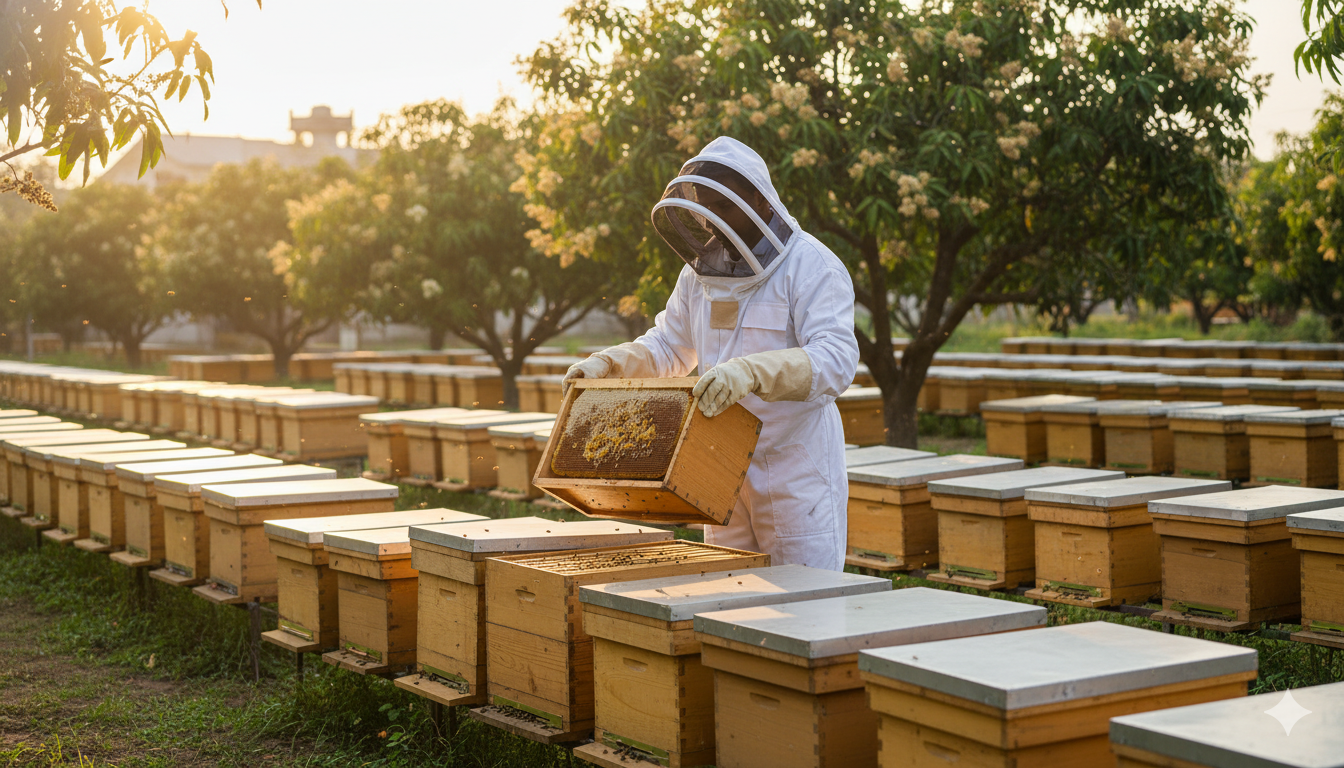
Beekeeping involves maintaining bee colonies in boxes or hives for honey production and, in some cases, wax, bee colony multiplication, and pollination-linked earnings. It can begin on a small scale with a few boxes and later expand into a larger honey production or apiary-based business. This opportunity works best where flowering crops, orchards, natural vegetation, clean surroundings, and suitable weather conditions support bee activity. It usually requires lower land investment than many livestock businesses, but success depends on colony health, seasonal planning, hive care, protection from disease and predators, and access to local or wholesale honey buyers.
Who this is suitable for
Suitable for rural families, small-capital seekers, farmers, orchard owners, and users who can learn basic hive management, seasonal movement, and safe handling of bees.
Who should avoid it
Not ideal for users who are unable to work around bees safely, cannot handle sting risk, or do not have access to suitable floral surroundings or regular hive monitoring.
First Steps
-
Assess flowering and location suitability
Check whether your area has enough flowering plants, crops, orchards, or natural vegetation to support healthy bee activity through the season. -
Decide your starting scale
Begin with a small number of colonies or boxes so you can learn handling, hive care, and honey collection without taking excessive early risk. -
Arrange hive equipment and safety gear
Prepare bee boxes, protective clothing, gloves, smoker, hive tools, collection containers, and a safe working process before bringing colonies. -
Source healthy bee colonies
Buy colonies only from reliable sources and check colony strength and health so your starting setup has better production potential. -
Place hives in a safe and productive area
Keep boxes where bee activity is supported by flowering sources, low disturbance, shade balance, and reduced risk from pests or harmful spraying. -
Follow routine hive inspection and care
Inspect colonies regularly for food availability, queen activity, disease signs, pest issues, and overall hive strength so losses are minimized. -
Collect and store honey properly
Harvest honey carefully at the right time, use clean containers, and maintain basic hygiene so the final product remains marketable. -
Expand into more colonies and value-added sales
After gaining confidence, increase the number of hives, improve packaging, and explore sale of honey, wax, or pollination-linked service opportunities.
Risks and Challenges
-
Colony health problems: Weak colonies, disease, pests, or poor seasonal care can reduce honey production and lead to colony loss.
-
Poor flowering or seasonal mismatch: If nectar and pollen sources are weak or seasonal planning is poor, honey output may fall sharply.
-
Sting and handling risk: Careless handling or weak protection can lead to bee stings and unsafe working conditions.
-
Hive disturbance or loss: Predators, theft, weather exposure, or poor hive placement can damage colonies and reduce returns.
-
Weak honey-selling channels: If buyers are not identified early, honey may sell slowly or only at low wholesale rates.
Practical Fit
Where It Works Best
Market Dependency:
Depends on flowering season, crop cycles, local honey demand, wholesale buyer access, and ability to sell branded or raw honey at better margins.
Raw Material Dependency:
Strong dependence on healthy bee colonies, flowering sources, seasonal bee movement where relevant, hive equipment, and colony care inputs.
How to Succeed
When you may start earning:
Usually within 2 to 6 months depending on colony strength, season, and honey flow conditions.
Success Tips:
Start with a few healthy colonies, learn seasonal hive care, place boxes in safe flowering areas, protect colonies well, and build reliable honey-selling channels.
Common Mistakes to Avoid:
Poor hive placement, weak colony care, late disease response, careless handling, and starting too large without practical knowledge can reduce yield and colony survival.