Agarbatti Making
Home-based micro-business for producing and selling incense sticks in local markets.
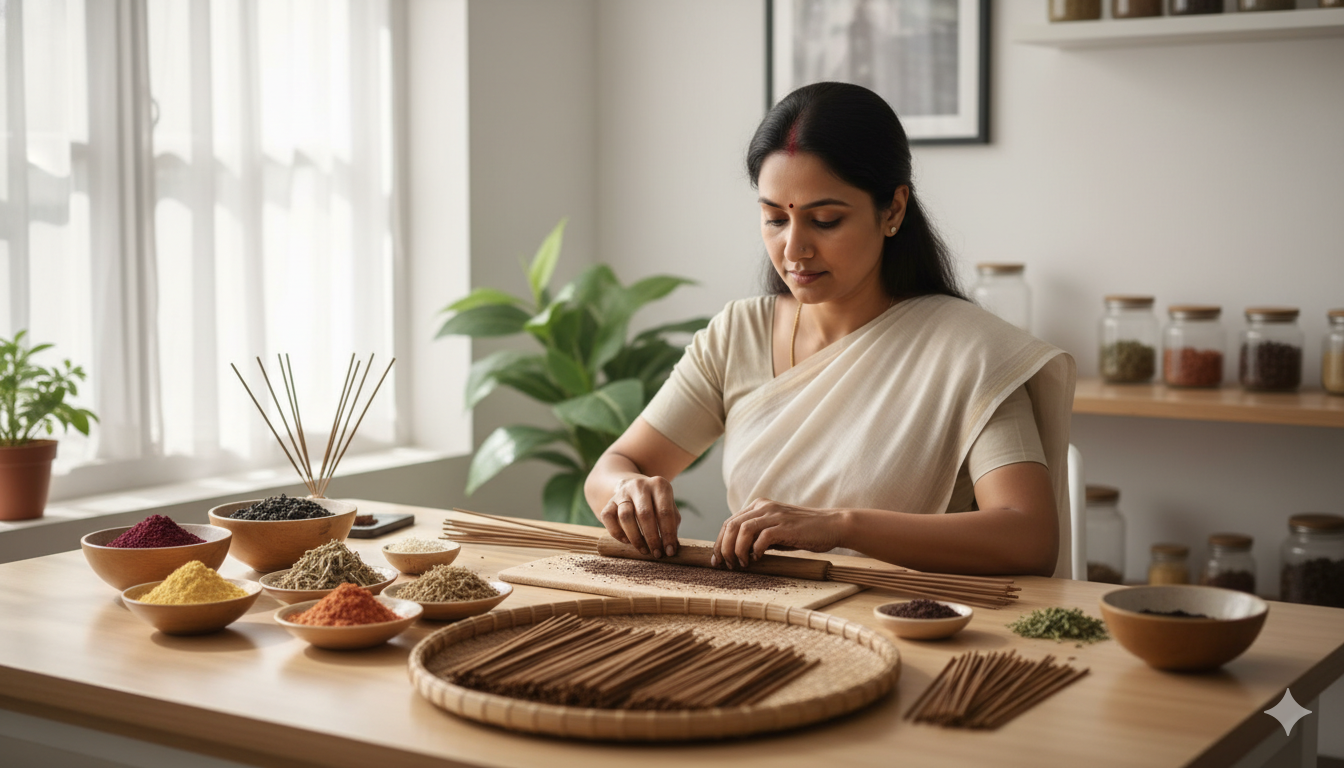
Overview
This opportunity involves making and selling agarbatti or incense sticks for households, puja use, local shops, gift packs, and festival demand. It can be started from home with small manual setup or basic machine support, and may serve neighborhood customers, wholesalers, temples, and retail shops.
Who this is suitable for
Suitable for homemakers, small-capital seekers, rural and semi-urban households, and families looking for simple home-based manufacturing work.
Who should avoid it
Not ideal for users who dislike repetitive handwork, powder handling, fragrance work, packaging effort, or patient small-batch production.
First Steps
-
Choose a simple starting product type
Begin with one or two basic agarbatti variants such as daily-use incense sticks or one fragrance type instead of offering many varieties at once. -
Arrange raw materials and drying space
Set up a clean work area with powder mix, bamboo sticks, fragrance, trays, packaging material, and a dry place for proper drying and storage. -
Standardize mixing, rolling, and fragrance quality
Keep the thickness, burn quality, fragrance level, and finish consistent so customers get the same quality in every batch. -
Start with local sales and small shop supply
Sell first to nearby households, local puja shops, temples, kirana stores, and neighborhood retailers to build repeat demand. -
Expand through regular buyers and better packaging
Once demand stabilizes, improve packaging, add fragrance options, and build repeat supply relationships with local retailers or small wholesalers.
Risks and Challenges
-
Weak fragrance or burn consistency: If fragrance strength, burn time, or stick quality changes often, repeat customers may stop buying.
-
Moisture and storage damage: Poor drying or damp storage can spoil agarbatti quality and reduce shelf life.
-
Slow-moving stock: Making too much product before understanding local demand can lock money into unsold inventory.
-
Thin margins from weak packaging or pricing: If raw material cost, fragrance, labor, and packaging are not tracked properly, actual profit may stay low.
Practical Fit
Where It Works Best
Market Dependency:
Demand depends on local household use, puja and religious demand, festival seasons, shop relationships, and repeat bulk buyers.
Raw Material Dependency:
Depends on availability and cost of agarbatti powder mix, bamboo sticks, fragrance oils, packaging materials, and drying support.
How to Succeed
When you may start earning:
Often within a few days to 2 weeks
Success Tips:
Start with a small product range, keep fragrance and burn quality consistent, package neatly, and build repeat buyers through local trust.
Common Mistakes to Avoid:
Poor raw material quality, weak fragrance consistency, damp storage, and buying too much stock too early can reduce profit and repeat sales.