Spice Grinding / Packaging Unit
A small processing business for grinding, blending, and packing spices for households, retailers, and local food businesses.
Overview
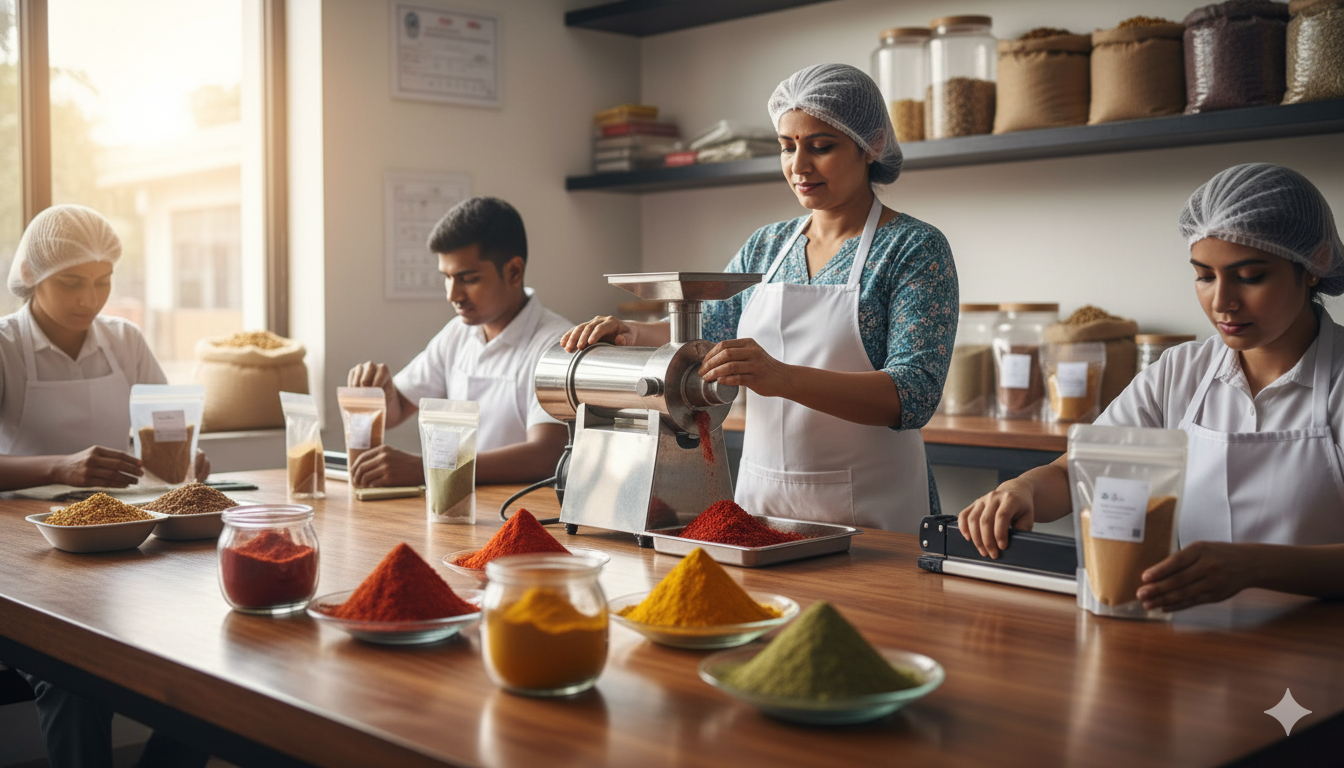
A spice grinding and packaging unit involves cleaning, drying where needed, grinding, blending, and packing spices such as turmeric, chili, coriander, cumin, garam masala, and other locally demanded products. The business can operate as a service unit for custom grinding or as a small packaged-spice brand for local sale. It can be started from a small shop, semi-commercial room, village market point, or home-adjacent workspace where machines, storage, and hygienic packing are manageable. Income may come from grinding charges, sale of packaged spices, repeat supply to kirana stores, snack makers, caterers, hotels, and direct household customers. Success depends on spice quality, cleanliness, aroma retention, accurate packing, attractive presentation, machine reliability, and trust in purity and freshness.
Who this is suitable for
Suitable for small-capital seekers, homemakers with support, family-run businesses, and users who can manage raw material sourcing, basic processing, hygiene, packing, and local sales.
Who should avoid it
Not ideal for users without access to a suitable workspace, power setup, odor and dust handling tolerance, or those who want a no-maintenance business with no daily process discipline.
First Steps
-
Assess local spice demand and product choice
Check which spices or blends are most used by nearby households, food businesses, kirana stores, and local markets so you can start with a focused product mix. -
Choose your operating model
Decide whether to do only custom grinding, packaged spice sales, or a mixed model with both local service and retail products. -
Set up machine and hygienic workspace
Arrange the grinder, sealing setup, storage bins, weighing tools, and a clean work area where dust, odor, and product handling can be managed safely. -
Source quality raw spices and packaging
Buy good-quality whole spices, check dryness and cleanliness, and arrange packaging material so the final product remains fresh and marketable. -
Set pricing and pack sizes clearly
Define retail pack sizes, grinding charges if applicable, margin targets, and labeling or identification so pricing remains consistent. -
Start with local household and retailer sales
Begin by selling to neighbors, nearby kirana shops, food vendors, and repeat household buyers so trust builds through direct feedback. -
Maintain quality consistency and hygiene
Keep separate batches clean, avoid moisture exposure, clean machines regularly, and maintain strong aroma and freshness in every pack. -
Expand into blends and repeat supply
After stabilizing demand, add blended masalas, better packaging, and regular supply to shops, caterers, and local food businesses.
Risks and Challenges
-
Quality inconsistency across batches: If raw spices vary in quality or grinding and blending are not controlled well, repeat customers may lose trust.
-
Moisture and storage damage: Improper storage can reduce aroma, spoil spices, or create lumps and contamination problems.
-
Machine downtime or poor grinding performance: If the machine fails or does not grind evenly, daily operations and product quality can suffer.
-
Strong local competition: Loose market spices, branded products, or nearby grinders may create price pressure and slower customer acquisition.
-
Weak branding or packaging: If the product does not look clean, fresh, or trustworthy, local buyers may not shift from existing options.
Practical Fit
Where It Works Best
Market Dependency:
Depends on local household demand, retailer trust, pricing competition, repeat kitchen demand, and the ability to sell freshness and purity over loose market alternatives.
Raw Material Dependency:
Strong dependence on good-quality whole spices, storage conditions, packaging material, power availability, machine parts, and hygiene supplies.
How to Succeed
When you may start earning:
Usually within 2 to 6 weeks if the unit is installed properly and local demand or retailer links are available.
Success Tips:
Start with a few high-demand spices, maintain strict cleanliness, use good raw materials, pack consistently, and build trust through aroma, purity, and repeat quality.
Common Mistakes to Avoid:
Using low-quality spices, poor storage, mixing batches carelessly, weak sealing, and inconsistent quality can reduce repeat customers quickly.