Small Grocery / Mini Convenience Shop Owner
Low to moderate investment micro-business serving daily household needs in local neighborhoods.
Overview
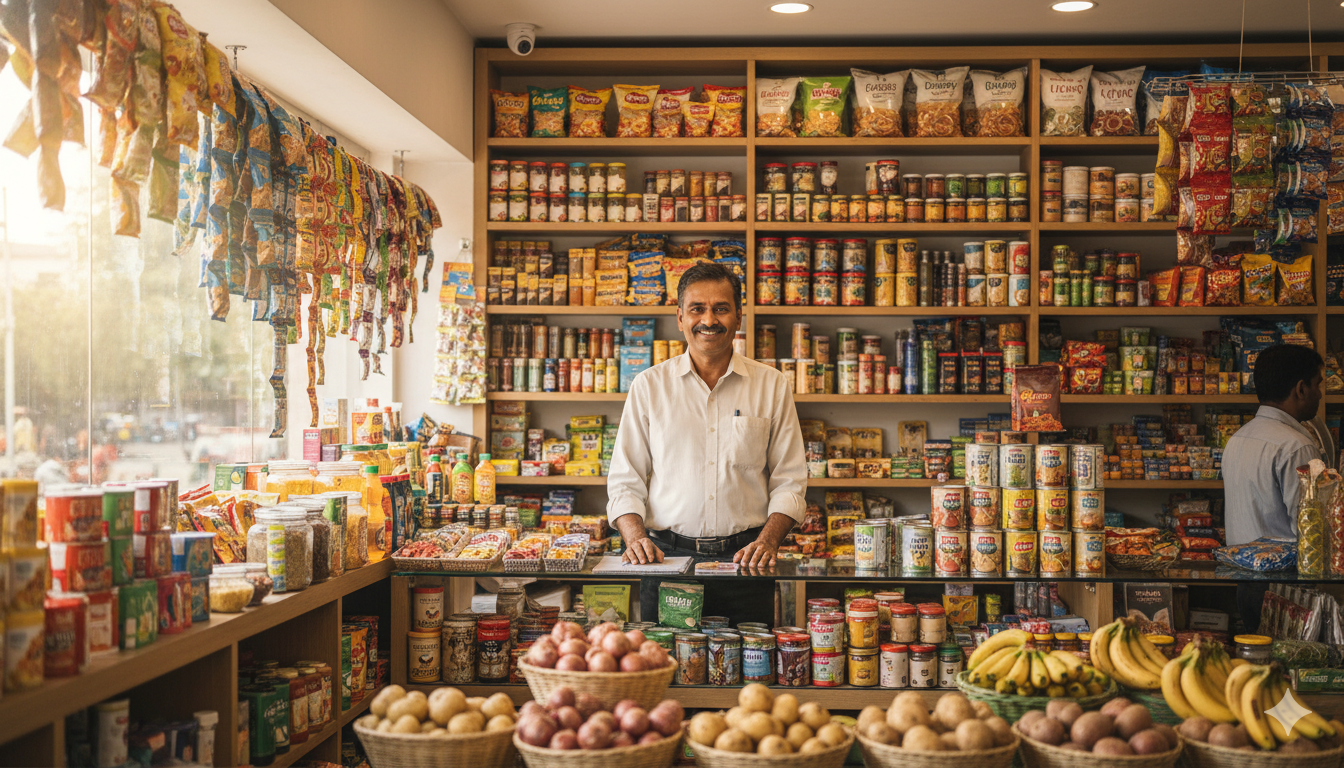
This opportunity involves running a small grocery, kirana, or mini convenience shop that sells daily-use items such as packaged food, snacks, tea, biscuits, grains, household essentials, personal-care items, dairy products, and small fast-moving consumer goods. The shop can serve residential neighborhoods, villages, apartment clusters, or mixed local markets.
Who this is suitable for
Suitable for small-capital seekers, families with a usable shop space, homemaker-supported households, and people who can manage daily customer service, stock handling, and neighborhood relationships.
Who should avoid it
Not ideal for users who dislike routine daily operations, inventory management, long opening hours, or close margin control.
First Steps
-
Choose a practical local location
Pick a residential lane, village center, apartment cluster, roadside market point, or mixed neighborhood where daily household demand is steady. -
Start with fast-moving essential items
Begin with products people buy repeatedly, such as tea, biscuits, snacks, oil, soap, salt, sugar, flour, daily personal-care items, and small household goods. -
Build supplier and restocking discipline
Identify nearby wholesalers and distributors, compare margins, and set a routine for refilling fast-moving items before shelves go empty. -
Track stock, cash, and customer credit carefully
Maintain a simple daily record of sales, purchases, high-demand items, and any customer credit so losses do not build silently. -
Expand with repeat-demand and convenience services
After the shop stabilizes, add home delivery, recharge items, cold drinks, dairy, school snacks, or other neighborhood-demand products carefully.
Risks and Challenges
-
Slow-moving stock and cash lock-up: Buying too many low-demand products can trap working capital and reduce cash available for fast-moving essentials.
-
Thin margins and price competition: Small grocery businesses often run on tight margins, so poor pricing and nearby competition can reduce profit quickly.
-
Excess customer credit: Giving too much udhaar or informal credit can create cash-flow pressure and make supplier payment difficult.
-
Stock expiry and leakage: Poor shelf monitoring, spoilage, pilferage, or unrecorded usage can quietly reduce earnings over time.
Practical Fit
Where It Works Best
Market Dependency:
Demand depends on neighborhood density, daily household footfall, local competition, delivery convenience, and product mix.
Raw Material Dependency:
Depends on reliable wholesalers, distributor supply, credit discipline, and availability of fast-moving daily-use goods.
How to Succeed
When you may start earning:
Usually within 2 to 6 weeks
Success Tips:
Start with fast-moving essentials, track daily sales carefully, control wastage and credit, and build trust through availability and fair pricing.
Common Mistakes to Avoid:
Overstocking slow items, giving too much credit, weak stock tracking, and poor supplier planning can reduce profit quickly.