Pickle / Papad / Spice Making Business
Home-based micro-business using food preparation skills and local sales channels.
Overview
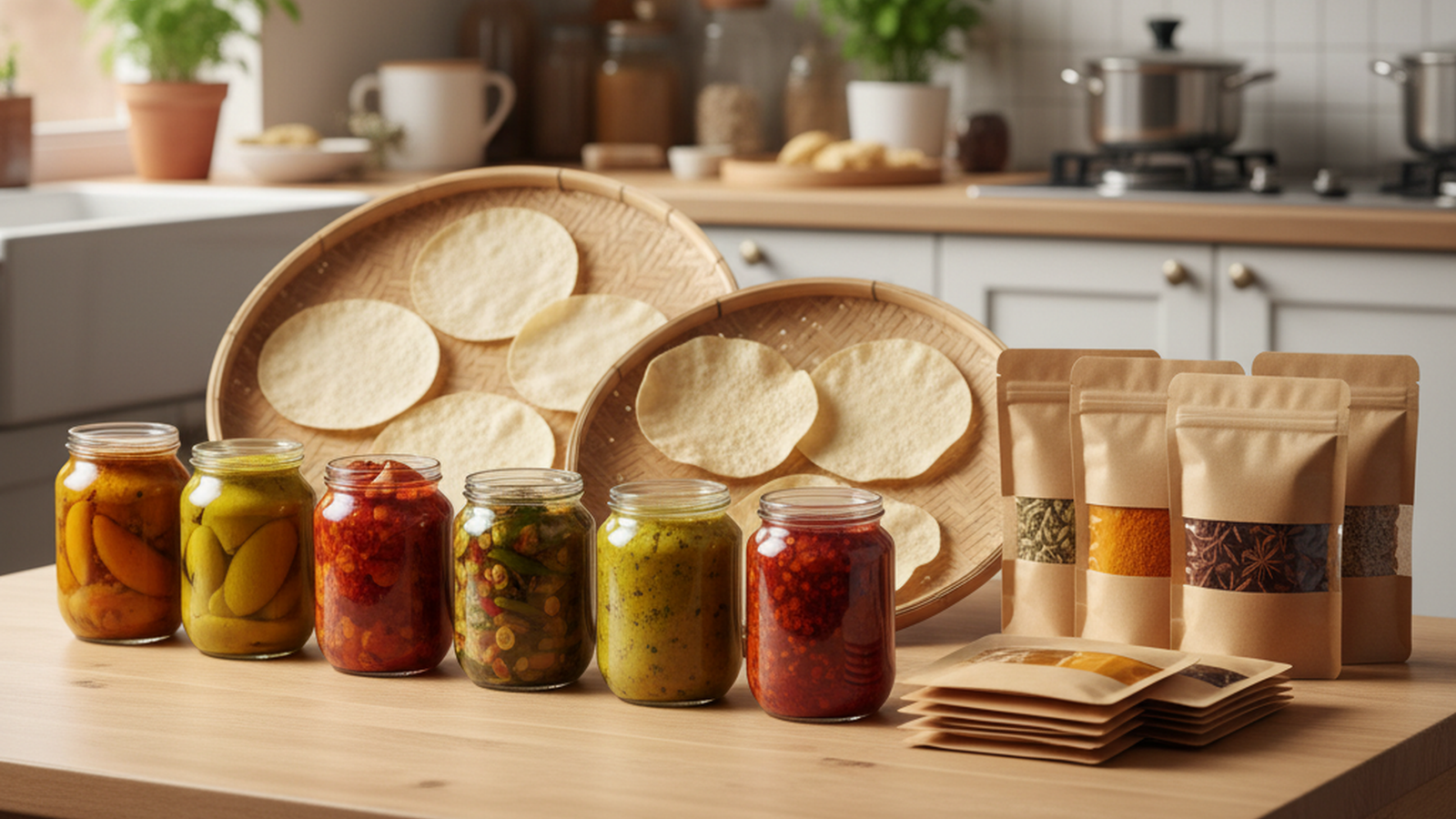
Users can prepare packaged homemade products such as pickles, papad, masala mixes, or snacks for neighborhood sales, local stores, and WhatsApp orders.
Who this is suitable for
Suitable for homemakers and family-supported home entrepreneurs.
Who should avoid it
Not ideal for users who cannot maintain consistency, hygiene, or packaging discipline.
First Steps
-
Choose a small starter product range
Begin with one or two products such as aachar, papad, masala mix, or dry snacks instead of trying many items at once. -
Standardize recipe and quality
Fix ingredient ratios, taste, drying method, oil level, spice balance, and packaging size so customers receive the same quality each time. -
Arrange ingredients, tools, and packaging
Keep kitchen tools, mixing and drying setup, jars or pouches, labels, and storage containers ready before taking regular orders. -
Start with neighborhood and referral sales
Sell first to neighbors, relatives, local women groups, office circles, and WhatsApp contacts to get repeat feedback and build trust. -
Expand into repeat and reseller channels
After product consistency improves, add local shops, festive gift packs, subscription-style repeat buyers, and small reseller arrangements.
Risks and Challenges
-
Inconsistent taste and quality: If flavor, freshness, drying quality, or spice balance changes frequently, repeat customers may stop buying.
-
Poor shelf-life management: Improper storage, moisture exposure, or weak packaging can reduce product life and lead to spoilage or complaints.
-
Too many products too early: Expanding the product line too fast can create waste, working capital pressure, and quality inconsistency.
-
Weak pricing discipline: If oil, spices, packaging, gas, and labor are not properly counted, sales may look good while profit stays low.
Practical Fit
Where It Works Best
Market Dependency:
Works well where local trust and word-of-mouth support food sales.
Raw Material Dependency:
Depends on ingredient sourcing, packaging, and shelf-life handling.
How to Succeed
When you may start earning:
Usually within 2 to 4 weeks
Success Tips:
Begin with a few well-made products and gather repeat customers.
Common Mistakes to Avoid:
Too many products too early can create waste and inconsistency.