Goat Farming
A livestock-based rural and semi-urban micro-business built around breeding, rearing, and sale of goats for meat, milk, or breeding stock.
Overview
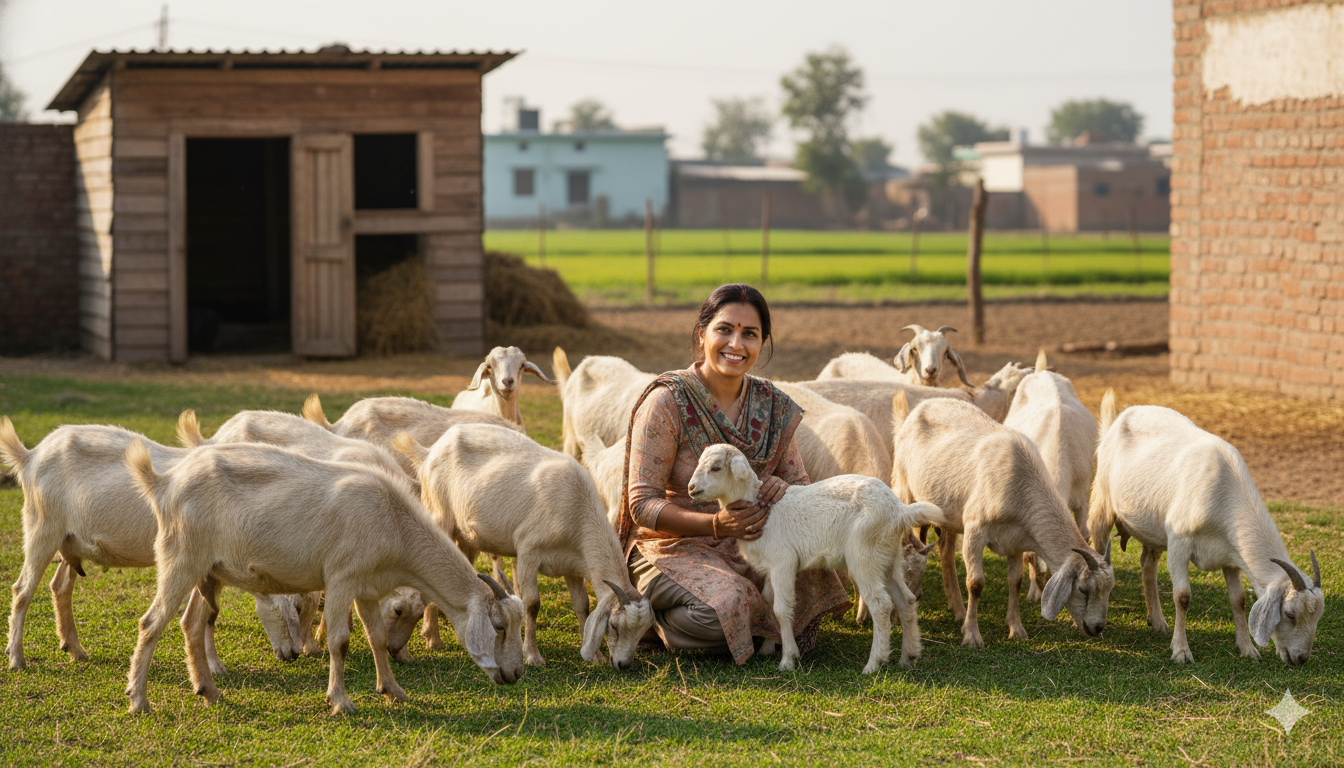
Goat farming involves raising goats for meat sale, breeding, kid rearing, occasional milk use in certain markets, and sale of manure or related by-products. It can begin with a small number of goats and gradually grow into a larger herd-based business. This opportunity works best where grazing options, fodder access, clean water, basic shelter, and local buyers or livestock markets are available. Goat farming is often attractive because goats can fit smaller-scale livestock systems and can be managed by families, but success still depends heavily on animal health, breed selection, feeding discipline, disease prevention, breeding management, and timing of sales.
Who this is suitable for
Suitable for rural families, small landholders, homemakers with family support, and users who can handle daily livestock care, feeding, cleaning, and market coordination.
Who should avoid it
Not ideal for users without animal-care ability, access to space or fodder, or those looking for a low-effort business with no daily responsibility.
First Steps
-
Assess space, fodder, and family support
Check whether you have enough space for shelter, feeding, cleaning, water access, and people who can help with daily goat care. -
Choose your goat farming model
Decide whether to focus on breeding, kid rearing, meat-purpose sale, or a small mixed herd model based on budget and local demand. -
Prepare shelter and safety setup
Arrange a clean, dry, well-ventilated shelter with basic fencing or control so goats stay protected from rain, predators, and disease spread. -
Purchase healthy goats carefully
Buy only after checking breed quality, age, body condition, disease history, and local veterinary guidance so your starting herd is stronger. -
Secure local selling channels
Identify livestock traders, butchers, farmers, local markets, or festival-time buyers before expanding the herd too quickly. -
Follow daily health and feeding routine
Maintain regular feeding, watering, cleaning, deworming, vaccination, and observation so disease is detected early and growth remains stable. -
Track breeding, growth, and costs
Keep simple records for breeding dates, kidding, feed costs, medicine, mortality, and sale value so business decisions improve over time. -
Expand the herd gradually
Increase the number of goats only after your shelter, feed planning, disease control, and buyer network are stable enough to support growth.
Risks and Challenges
-
Animal disease and mortality: Disease outbreaks, delayed treatment, or weak preventive care can reduce herd growth and create major financial loss.
-
Poor breed or animal selection: Buying weak, unhealthy, or low-quality goats at the start can reduce breeding performance and sale value.
-
Feed and fodder stress: If grazing, fodder, or feed planning is weak, growth slows and cost pressure rises.
-
Buyer and price fluctuations: Sale price can vary by season, local market conditions, festival timing, and buyer dependency.
-
Weak shelter and hygiene: Wet floors, overcrowding, and poor shelter design can increase disease and reduce animal performance.
Practical Fit
Where It Works Best
Market Dependency:
Depends on local goat demand, festival and seasonal selling periods, livestock market access, buyer reliability, and local meat consumption patterns.
Raw Material Dependency:
Strong dependence on fodder, grazing access or feed arrangement, water, veterinary support, deworming, vaccination, and shelter quality.
How to Succeed
When you may start earning:
Usually within 2 to 6 months depending on whether the model is breeding-focused, goat rearing for sale, or resale-oriented with ready market access.
Success Tips:
Start small, choose healthy breeds, keep the shelter dry and clean, control disease early, track breeding carefully, and build links with reliable local buyers.
Common Mistakes to Avoid:
Buying weak animals, poor disease control, overcrowding, weak feeding discipline, and unclear selling strategy can reduce profits or cause losses.