Floriculture
A flower-growing micro-business focused on cultivation and sale of fresh flowers for markets, decorators, temples, events, and retail buyers.
Overview
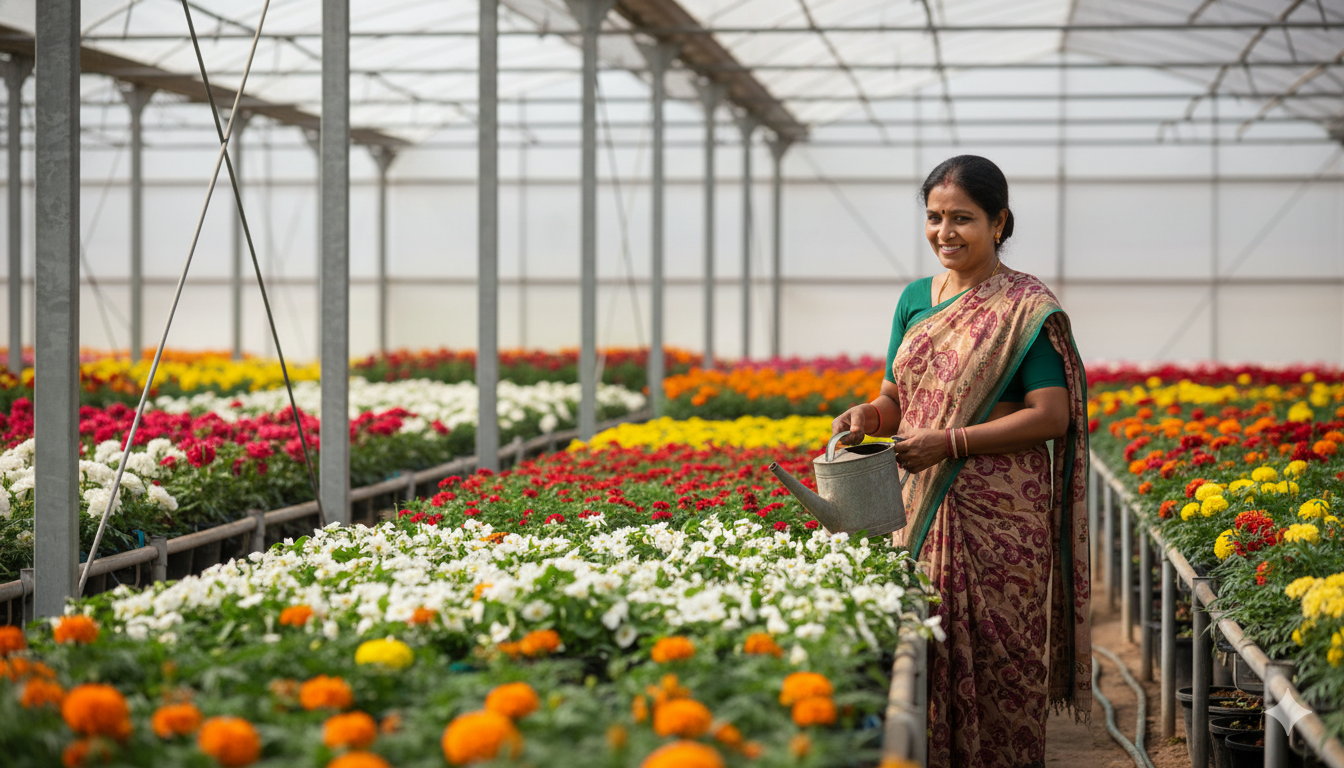
Floriculture involves cultivating flowers for commercial sale to wholesalers, retailers, florists, temples, wedding decorators, event businesses, bouquet makers, local markets, and direct household buyers. The business may include loose flowers, cut flowers, garland flowers, potted flowering plants, or seasonal flower crops depending on local demand and climate. It can be started on a small plot, leased land, or a family farm and expanded gradually into higher-value flower production. Income can be regular in strong demand areas, but success depends heavily on crop choice, seasonality, irrigation, pest control, harvesting discipline, freshness management, transport speed, and access to reliable buyers.
Who this is suitable for
Suitable for rural families, small landholders, women-led family businesses, and users who have cultivation space, water access, and the ability to manage careful crop and harvest work.
Who should avoid it
Not ideal for users without land or water access, or those looking for a low-maintenance business without weather, perishability, or buyer-dependence risk.
First Steps
-
Assess land, water, and local flower demand
Check soil condition, irrigation availability, local climate, and which flowers sell well in nearby markets, temples, florists, and event channels. -
Choose flower type and crop plan
Decide whether to grow loose flowers, garland flowers, cut flowers, seasonal flowers, or a mixed cultivation model based on local demand and budget. -
Prepare land and arrange inputs
Prepare the field and arrange seeds or planting material, irrigation support, fertilizer, crop-care inputs, and labor before planting begins. -
Plant with timing and spacing discipline
Follow proper planting schedule, spacing, and crop practices so flower yield, quality, and market timing improve. -
Monitor irrigation, pests, and crop health
Observe the crop regularly for water stress, pest attack, disease, and flower quality so losses are controlled early. -
Build buyer channels before peak flowering
Identify florists, temple suppliers, decorators, event businesses, garland makers, traders, or local markets before heavy harvesting starts. -
Harvest, sort, and move flowers quickly
Harvest at the right stage, sort by quality, and transport or sell quickly so freshness and price remain better. -
Review seasons and expand gradually
Track which flowers sold best, which season performed well, and which buyers paid reliably before increasing crop area or variety.
Risks and Challenges
-
Weather and crop damage risk: Unexpected rain, heat, wind, or water shortage can damage flower quality and reduce final sale value.
-
Pest and disease pressure: Flower crops can lose quality and market value quickly if pests and disease are not controlled early.
-
Perishability and freshness loss: Flowers lose value quickly if harvesting, sorting, storage, or transport is delayed or poorly managed.
-
Festival and demand fluctuation: Prices can rise sharply during festivals and weddings but may fall when supply is high or demand is weak.
-
Weak buyer linkage: Without florist, temple, decorator, or market connections, flowers may sell at lower rates or go unsold.
Practical Fit
Where It Works Best
Market Dependency:
Depends on local flower demand, festival cycles, wedding and event demand, temple consumption, retailer and decorator linkages, and price movement during peak and off-peak seasons.
Raw Material Dependency:
Strong dependence on seeds or planting material, irrigation, fertilizer, pest-control inputs, labor, and weather conditions during crop growth and harvest.
How to Succeed
When you may start earning:
Usually within 2 to 5 months depending on flower type, season, planting material, and local sale channel.
Success Tips:
Choose flowers with steady local demand, plan around festival and wedding seasons, harvest carefully, maintain freshness, and secure buyers before peak flowering.
Common Mistakes to Avoid:
Choosing the wrong flower for the area, poor pest control, weak irrigation planning, delayed harvesting, and no buyer arrangement can reduce profits sharply.