Dairy Products / Paneer / Ghee Micro-Business
Home-based or small-scale dairy processing business selling paneer, ghee, curd, and related fresh dairy items.
Overview
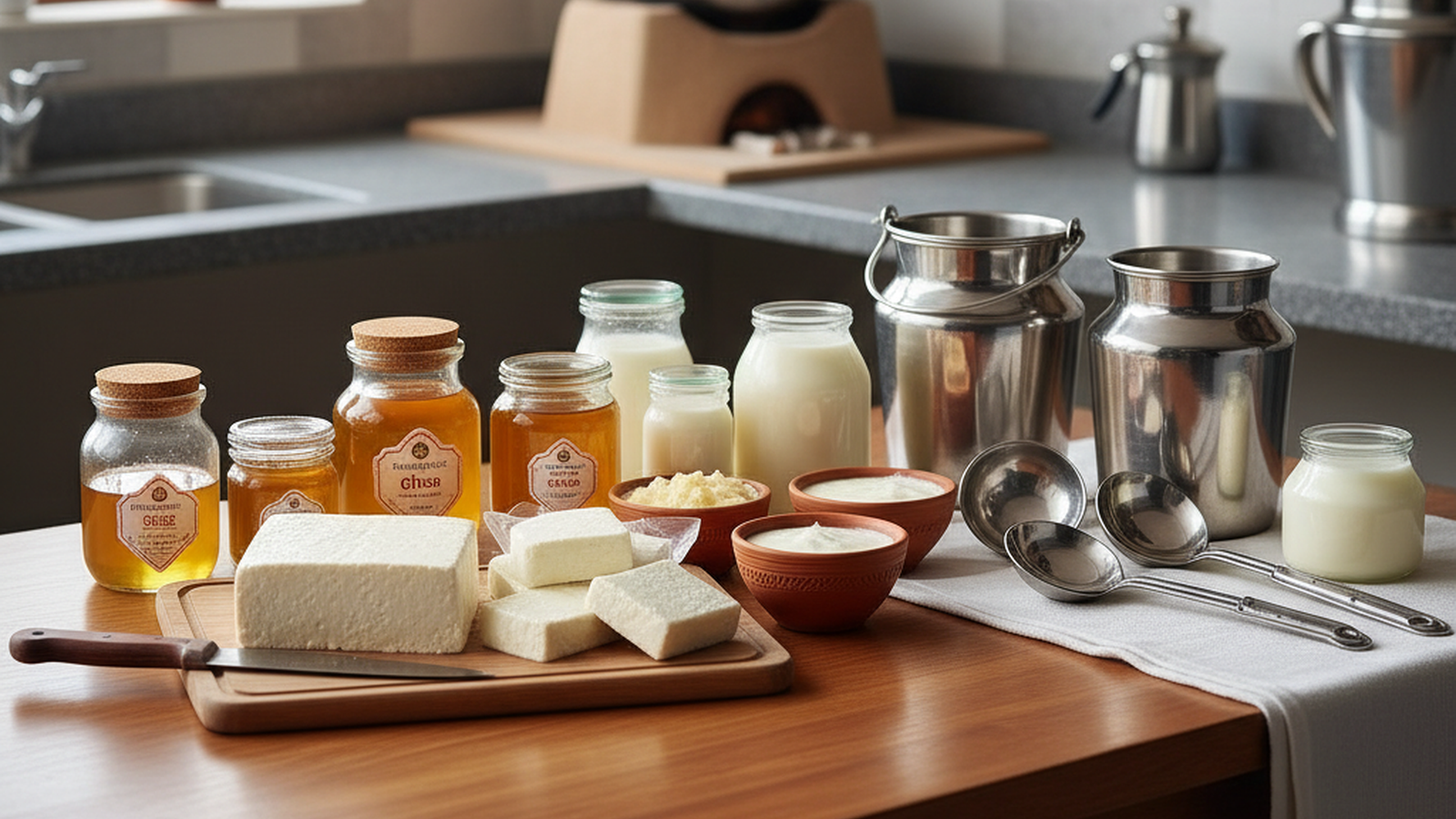
This opportunity involves preparing and selling paneer, ghee, curd, flavored milk, khoa, or other simple dairy products from fresh milk sourced locally or from one’s own dairy setup. It can serve households, tea shops, sweet shops, snack sellers, local food businesses, and neighborhood repeat buyers.
Who this is suitable for
Suitable for families with access to fresh milk, homemakers, rural and semi-urban households, and small-capital seekers who can maintain hygiene and consistent dairy quality.
Who should avoid it
Not ideal for users who cannot manage perishability, hygiene, daily freshness, or reliable sourcing of milk and packaging materials.
First Steps
-
Choose one or two starter dairy products
Begin with a focused range such as paneer, curd, or ghee instead of trying many dairy products at once. -
Secure reliable fresh milk supply
Make sure milk quality, quantity, and timing are dependable, whether it comes from your own animals, nearby dairy suppliers, or local milk vendors. -
Standardize preparation and packaging
Fix your process for heating, straining, storing, cooling, portion sizing, and packaging so customers receive consistent quality every time. -
Start with nearby regular buyers
Sell first to neighbors, local households, tea shops, snack sellers, sweet shops, and repeat neighborhood contacts to build trust quickly. -
Expand only after demand stabilizes
Once repeat demand becomes reliable, add more products, increase quantity, or serve more shops and local food businesses carefully.
Risks and Challenges
-
Perishability and spoilage risk: Paneer, curd, and other fresh dairy items can spoil quickly if storage, timing, or hygiene are weak.
-
Milk quality inconsistency: If milk quality changes from batch to batch, final product taste, texture, and customer trust can suffer.
-
Weak demand planning: Making too much perishable product without confirmed demand can create daily losses and wasted effort.
-
Thin margin under rising input costs: Milk, gas, labor, packaging, and transport costs can reduce profit if pricing is not reviewed regularly.
Practical Fit
Where It Works Best
Market Dependency:
Demand depends on household trust, freshness, nearby sweet shops or snack businesses, and repeat purchase patterns in the local market.
Raw Material Dependency:
Depends on reliable milk supply, gas or fuel cost, packaging, cooling support, and ingredient quality for consistent output.
How to Succeed
When you may start earning:
Often within a few days to 2 weeks
Success Tips:
Start with one or two products like paneer or ghee, keep quality and freshness high, and build repeat buyers before expanding the range.
Common Mistakes to Avoid:
Using poor-quality milk, weak hygiene, overproducing perishable items, and irregular consistency can quickly damage trust.